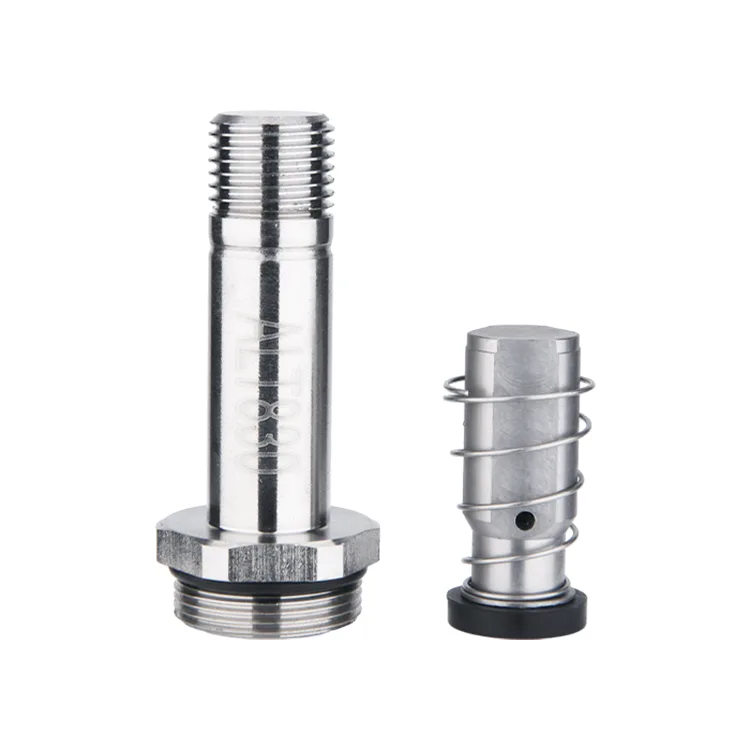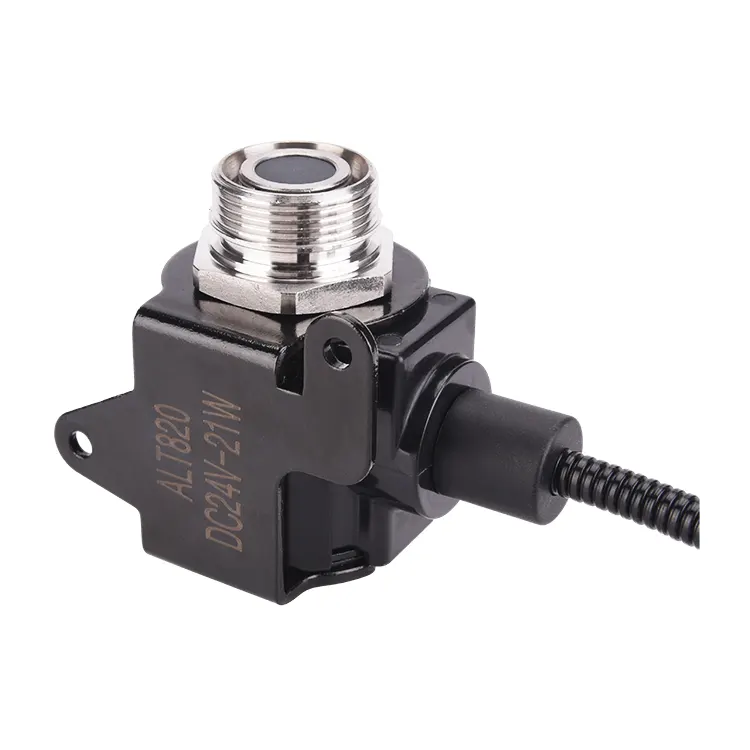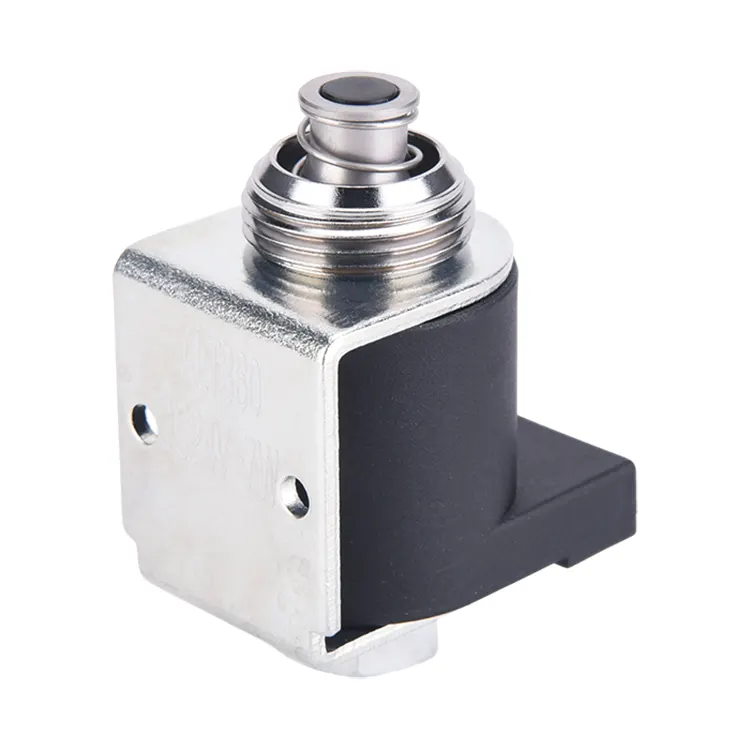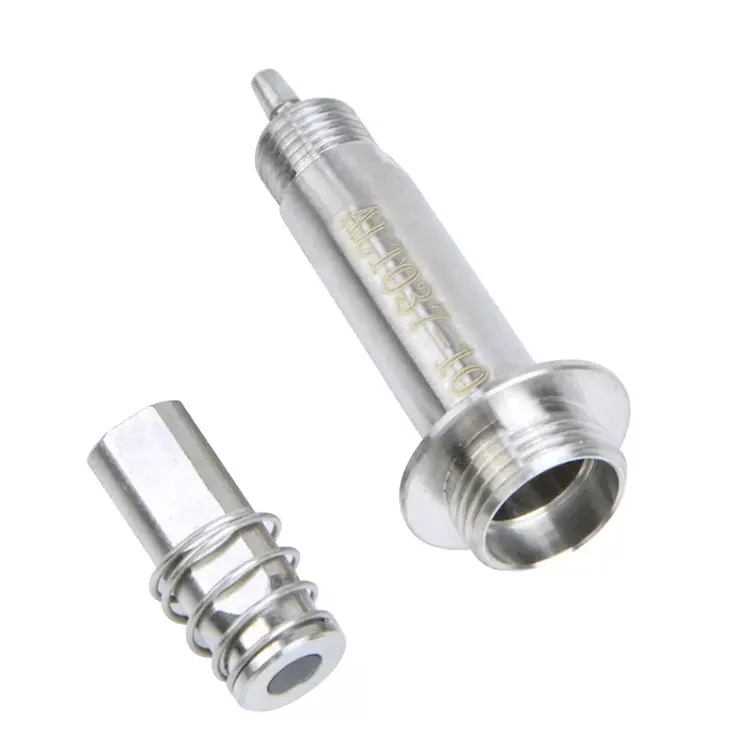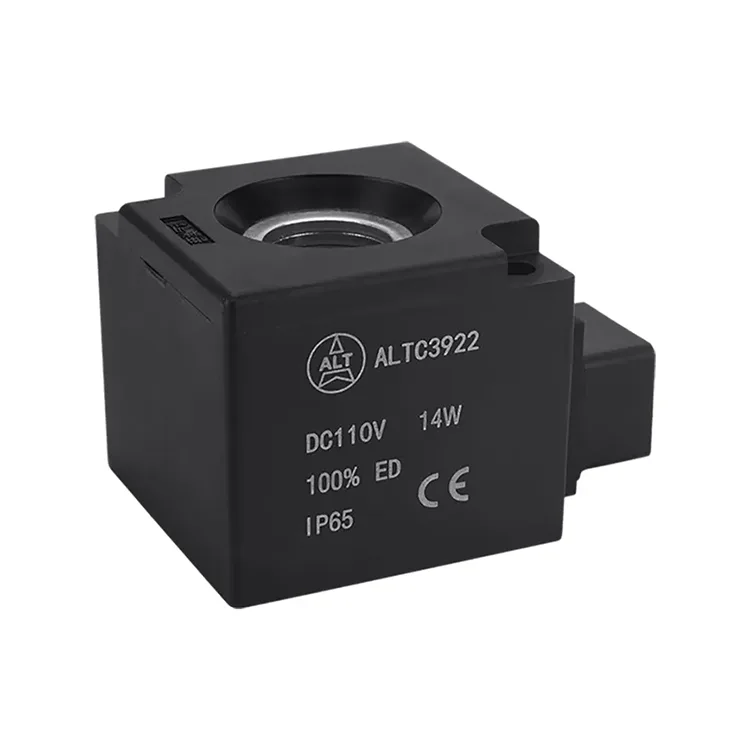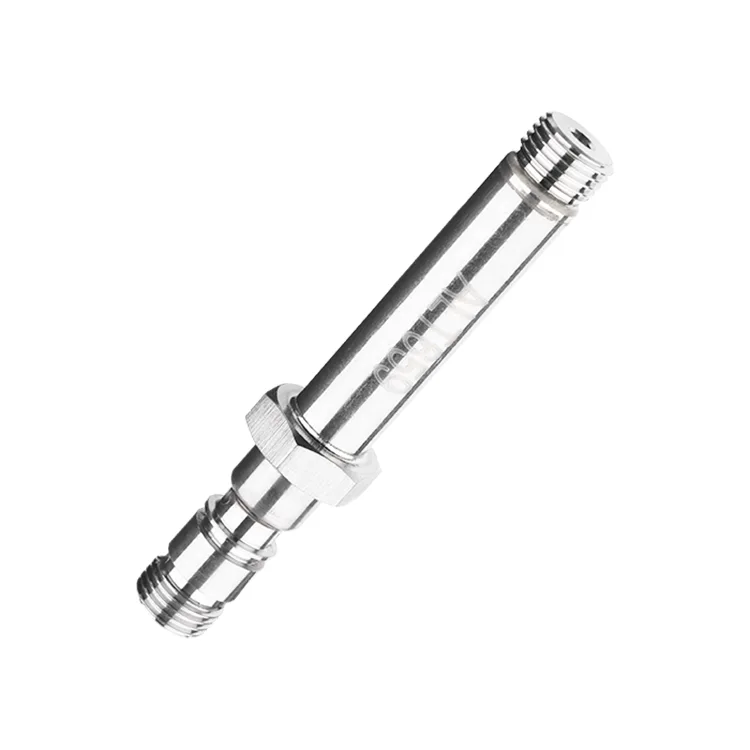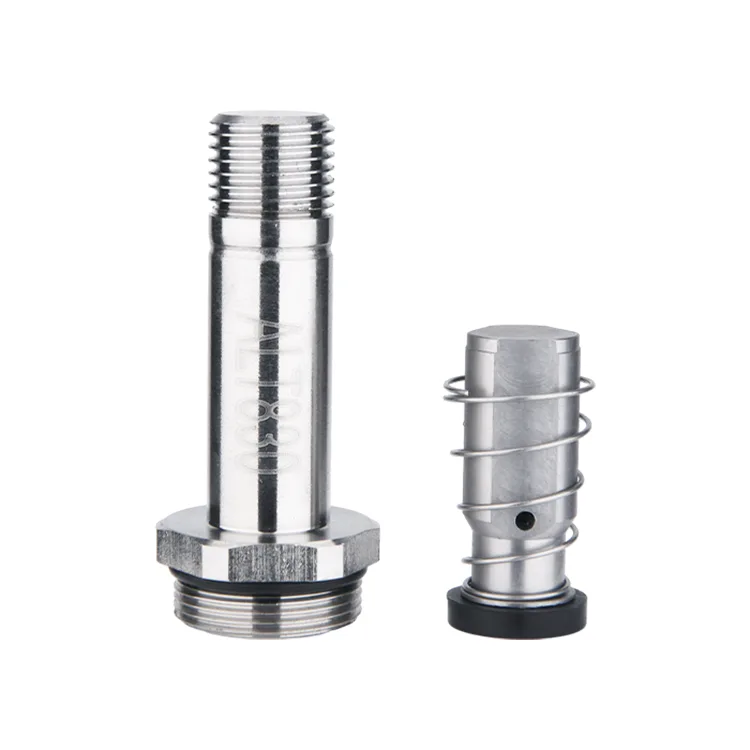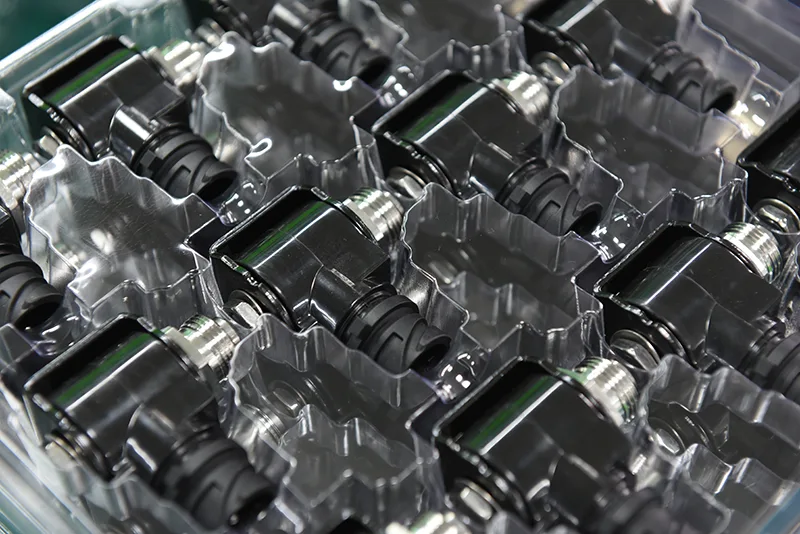
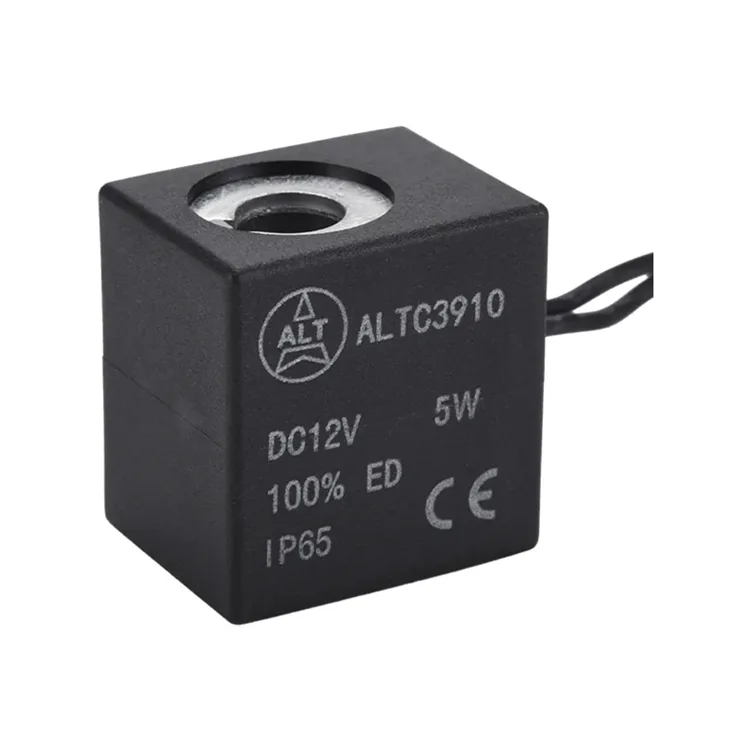
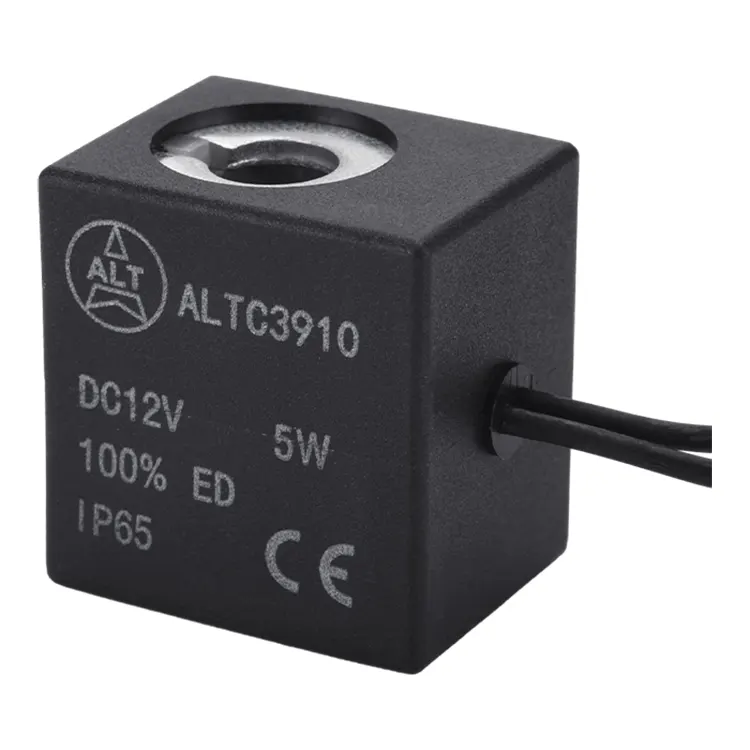
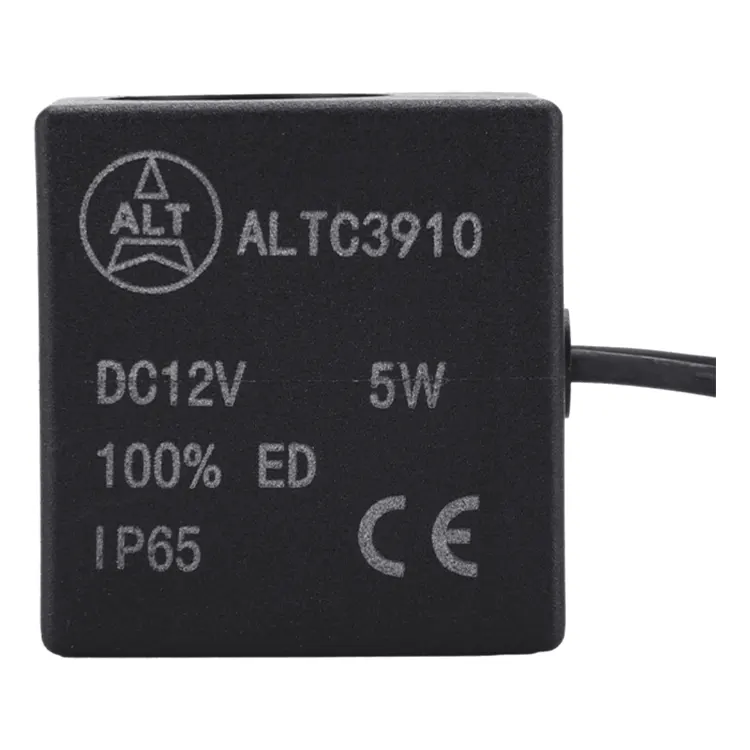
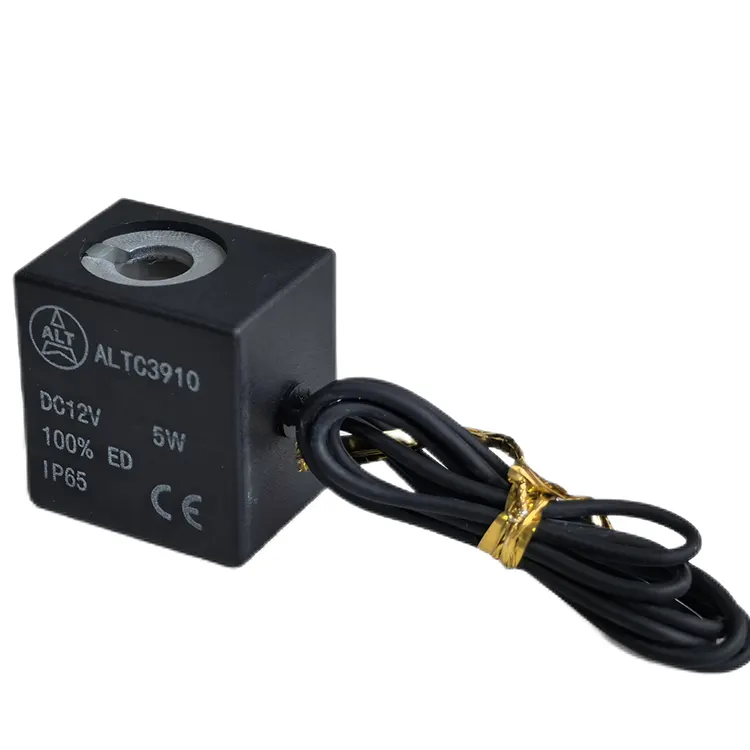
Our lead wire DC solenoid coils use Class H (180°C) UL-certified magnet wire for high-temperature insulation. Lead wires are available with QA or QZY insulation for heat and corona resistance.
The bobbin can be made from nylon, PPS, or PBT, depending on temperature and chemical resistance requirements. Brackets are available in DC01 or DT4E cold-rolled steel, selected according to mechanical strength and magnetic requirements. For additional protection, the coil can be overmolded with nylon or BMC.
Materials can be specified according to the application, and coil parameters such as voltage, duty cycle, lead length, and other dimensions can be customized.
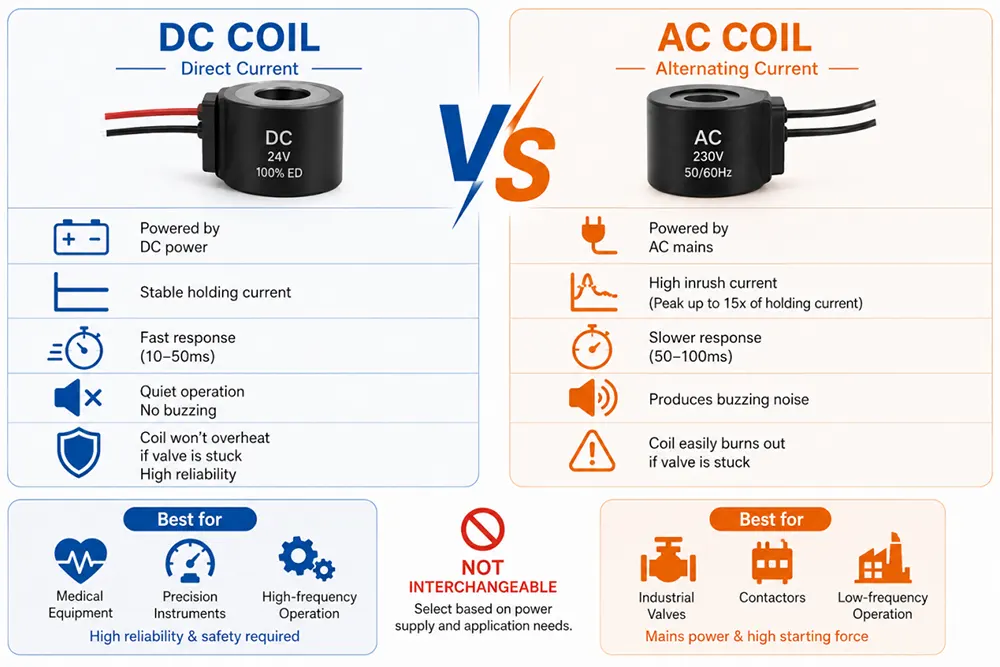
|
Item |
DC Coil |
AC Coil |
|
Power Supply |
DC power source |
AC power source |
|
Current |
Relatively stable holding current |
High inrush current during energization |
|
Response |
Typically 10–50 ms |
Typically 50–100 ms |
|
Noise |
No AC hum |
May produce audible humming |
|
Stuck Armature |
No inrush-current increase caused by armature sticking |
Armature sticking can cause overheating and coil failure |
|
Typical Applications |
High-cycle valves, medical equipment, precision instruments |
Mains-powered industrial valves, contactors, low-cycle applications |
DC and AC coils are designed for different power supplies and operating conditions and should not be treated as interchangeable. DC coils are generally preferred where stable operation, frequent cycling, and low operating noise are required. AC coils are suitable for applications powered directly from an AC supply where higher initial electromagnetic force is required.
Selection depends primarily on the available power supply, operating cycle, response requirements, and valve or actuator design.
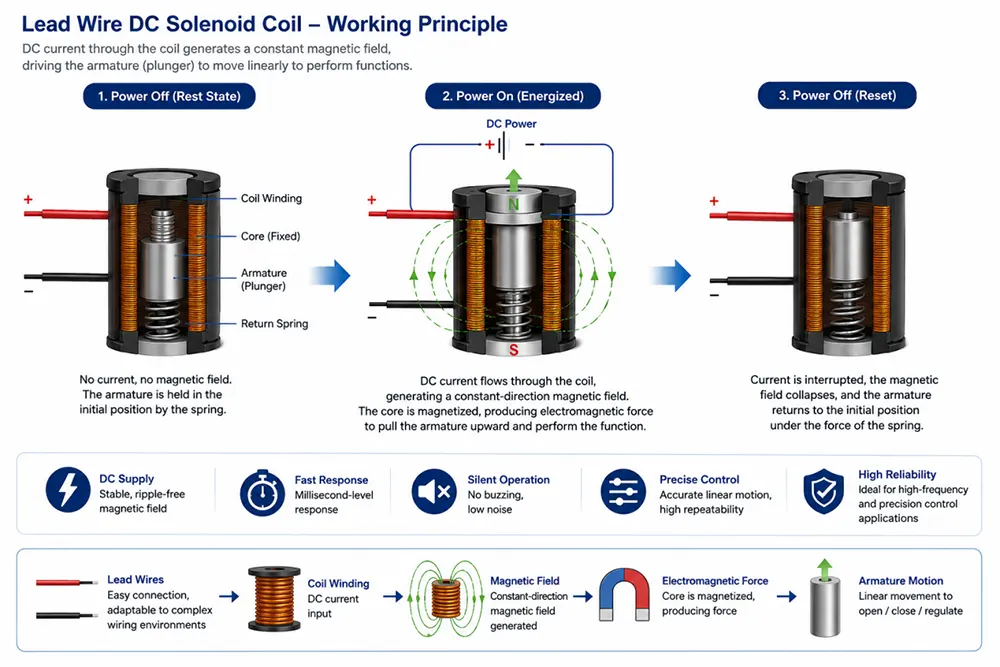
A lead wire DC solenoid coil converts electrical energy into electromagnetic force. When DC voltage is applied through the lead wires, current flows through the coil winding and generates a magnetic field. The magnetic field magnetizes the core and creates an electromagnetic force that moves the armature or plunger along its axis.
The pre-attached lead wires simplify electrical connection and are suitable for applications where space or wiring access is limited. When the power is switched off, the magnetic field disappears and the armature returns to its original position through the return spring.
The stroke and operating response depend on the coil design, supply voltage, armature structure, spring force, and load conditions. These parameters should be matched to the valve or actuator during selection.
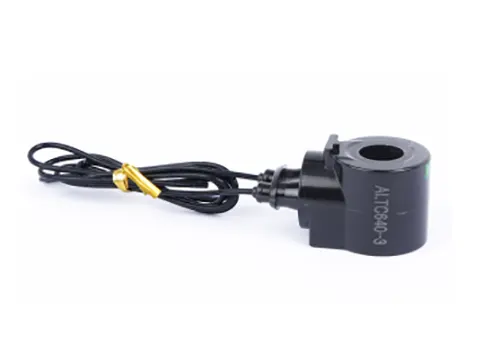
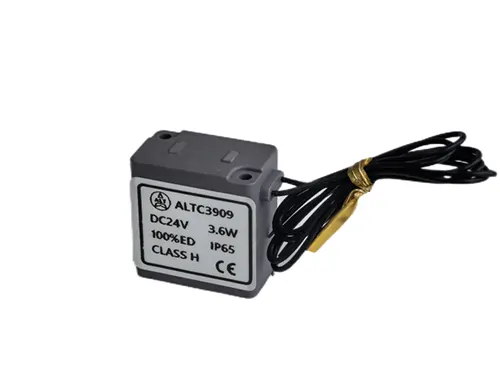
We manufacture lead wire DC solenoid coils in different sizes, voltages, power ratings, and lead configurations for valves, actuators, and other electromagnetic control systems. Coil dimensions and electrical parameters can be adapted to match the customer’s installation space and operating conditions.
The molded lead wire design integrates the cable connection with the coil body, reducing exposed connection points and providing IP65 protection where specified. This construction helps protect the coil from dust and low-pressure water jets and is suitable for outdoor equipment, construction machinery, and humid working environments.
Available configurations include different bobbin, bracket, and overmolding materials to match temperature, chemical exposure, and mechanical requirements. Voltage, power, lead length, connector or lead configuration, dimensions, and other coil parameters can be customized according to drawings or application requirements.
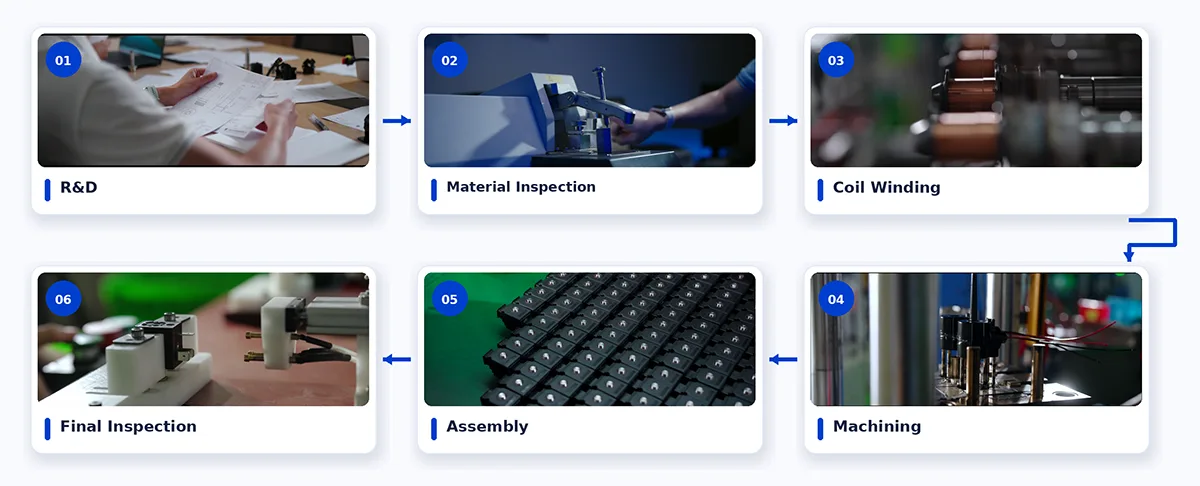
The production of coils is a comprehensive process that integrates precise winding, material selection and strict quality control. To ensure the electrical performance, thermal stability and long-term reliability of the final product, we have stipulated the following standardized processes for production:
After receiving the customer's inquiry, we will first confirm the technical requirements in detail with the customer, including:
Electromagnetic parameters: such as wire diameter, number of turns, resistance, inductance, and rated voltage/current
Thermal performance requirements: such as the insulation class and duty cycle of the coil
Material specifications: Specific models of materials such as frames, leads, and plastic-coated materials
If we are unable to obtain detailed and comprehensive specification requirements from the customer, we will inquire about the working conditions, temperature, frequency, etc. of the product's usage, and provide the customer with a solution.
After understanding the customer's requirements and receiving the sample order from the customer, we start to produce the samples. The passing of the sample test is the standard for mass production. If mold opening is required, 3D printed samples can be chosen. After the samples are completed, we will conduct preliminary tests first. The tests usually include: Electrical performance tests, inter-turn withstand voltage tests, temperature rise tests, mechanical strength tests, etc
Only when the samples fully meet the standards will they be approved to enter the mass production stage.
To ensure the consistency and efficiency of samples with mass production and batch production, we will specially design production fixtures to guarantee the precise positioning of coils, uniform winding tension and reduce dimensional deviations.
Before production, all Bill of Material must go through IQC. Only raw materials that meet the specifications can enter the production line. Core materials include: enameled wire, frame, terminals and insulating components, and leads .
This is the core process of coil manufacturing. The enameled wire is precisely wound onto the frame, and the tension must be well controlled. Uneven tension will directly affect the electromagnetic strength and structural strength of the coil.
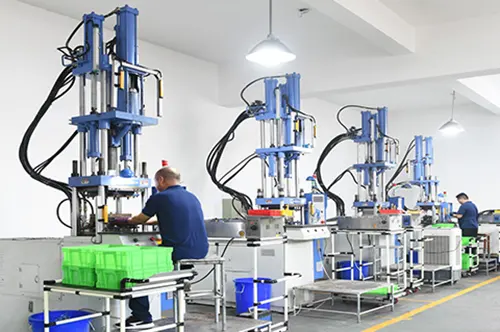
We are equipped with fully automatic multi-spindle winding machines, semi-automatic multi-spindle winding machines, and semi-automatic single-spindle winding machines, offering flexible production capacity for both high-volume standard orders and small-batch customized requirements. The multi-spindle winders significantly improve efficiency and consistency by winding multiple coils simultaneously, while the single-spindle machines excel in handling large wire gauges, complex winding patterns, and special custom designs – ensuring precise layer winding and accurate turn counts for every coil.
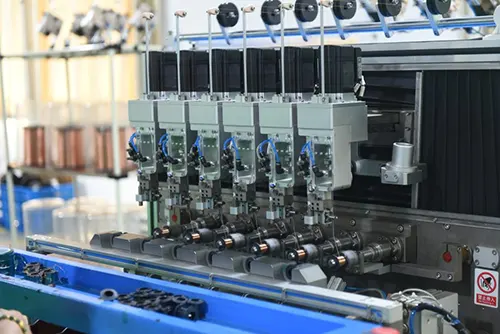
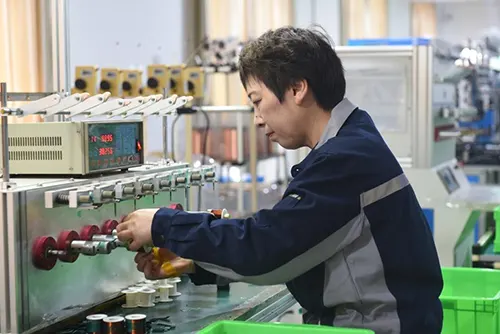
We employ orthocyclic winding technology to ensure precise turn counts and neat, compact layer arrangement for every coil. In this winding method, each layer of wire settles perfectly into the grooves between adjacent turns of the previous layer, forming a regular honeycomb-like structure that maximizes the copper fill factor up to 90% or higher.
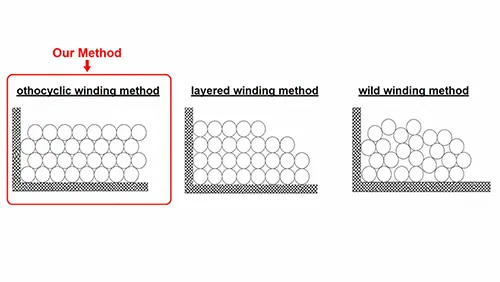
Compared to conventional wild winding, orthocyclic winding delivers multiple advantages: within the same package size, it accommodates more copper, effectively reducing DC resistance (DCR) and minimizing copper losses; the well-organized layer structure eliminates internal air voids, creating efficient heat dissipation paths that prevent localized hot spots; and precise mechanical winding ensures outstanding consistency across production batches, with stable electrical parameters that guarantee reliable electromagnetic force and extended service life.
This advanced process is made possible by our fully and semi-automatic multi-spindle winding machines, combined with precision-engineered bobbins and stringent process control – delivering high-performance, high-reliability coils for our customers.
Vacuum Impregnation – thermosetting epoxy or polyester resins penetrate into all internal voids of the coil under vacuum, forming a dense insulating layer after curing. This effectively enhances dielectric strength and thermal conductivity, making it suitable for general industrial applications where high ingress protection is not critical.
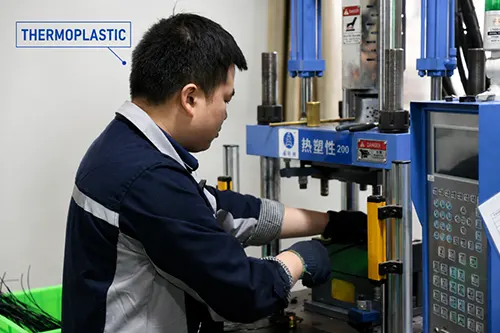
Overmolding (Injection Molding) – the coil is fully encapsulated within a plastic housing, achieving IP65 or higher protection ratings against dust and water ingress. Material options include:
Thermoplastics (nylon PA66, PBT) – high molding efficiency, excellent toughness, and impact resistance for general-purpose industrial environments
Thermosetting materials (BMC – Bulk Molding Compound) – superior heat resistance and dimensional stability for high-temperature or precision-critical applications
Whichever solution you require, we can tailor it to your specifications to ensure optimal coil performance in your equipment.
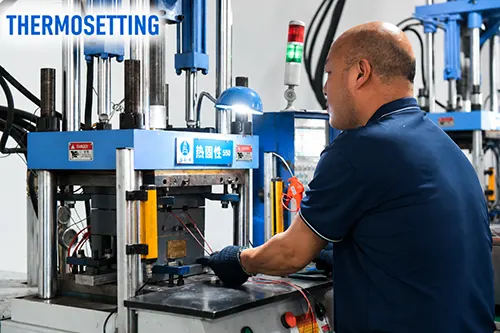
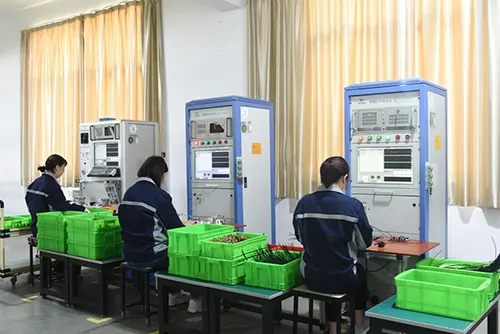
After completing all the procedures, we conduct a comprehensive quality inspection and high-pressure resistance test. The high voltage can reach over 1500V.
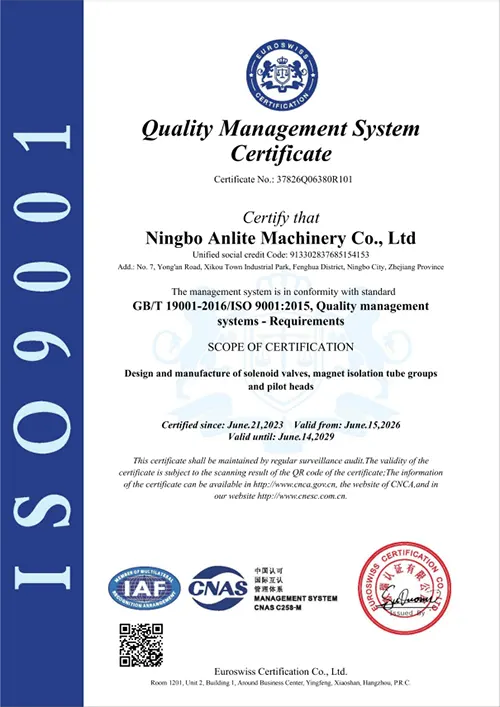
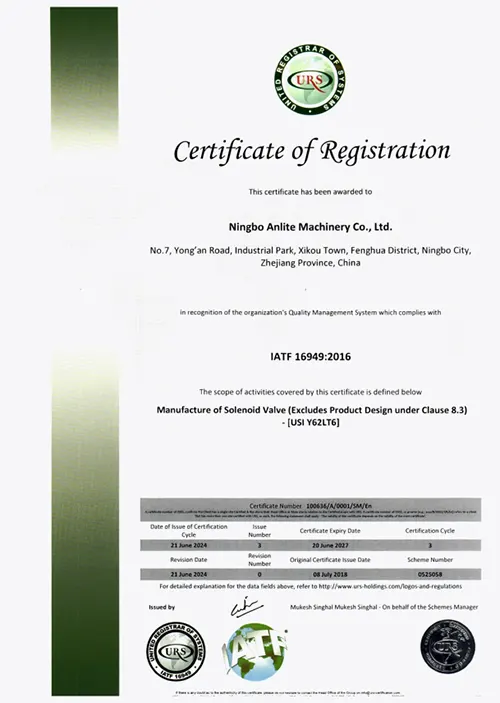
We have obtained ISO 9001, IATF 16949, CE, and other relevant certifications to ensure product quality and compliance with international standards.
Our quality management system follows strict manufacturing and inspection procedures throughout the entire production process, from raw material selection and component processing to assembly, testing, and final delivery.These certifications demonstrate our commitment to continuous quality improvement, reliable production control, and providing high-quality solenoid pilot heads and solenoid coils for global customers.
Our solenoid coils can use UL-recognized enamelled copper wire, with bobbins made from nylon, PPS, or PBT. Brackets are available in DC01 or DT4E cold-rolled steel, while encapsulation can use nylon, PA66, PBT, or BMC. Lead wire insulation can be selected according to the required temperature and electrical performance.
Yes. Samples, drawings, photographs, electrical specifications, and mating solenoid assemblies can all be used as development references. We can evaluate the winding, electrical parameters, dimensions, lead configuration, and encapsulation requirements before preparing samples.
At minimum, provide the DC voltage, required force or application function, operating frequency, duty cycle, installation dimensions, and ambient temperature. If available, the armature dimensions and existing coil sample are also very helpful.
Yes. Lead wire length, insulation type, routing direction, termination method, and other connection requirements can be customized according to the equipment installation.
A lead wire coil uses a pre-attached cable for direct connection, while a connector coil uses a detachable connector interface. Lead wire construction can be advantageous where installation space is limited or where reducing an external connector interface is preferred.
A DC solenoid coil should be used with the specified DC power supply. It should not be connected directly to an AC source unless the coil and the electrical circuit have specifically been designed and qualified for that application.
Yes, IP65-rated constructions are available for suitable applications. The final protection level depends on the overmolding structure, material, lead exit design, tooling, and validation of the complete coil assembly.
We use automatic and semi-automatic winding equipment, including multi-spindle and single-spindle machines. For suitable coil structures, orthocyclic winding is used to achieve controlled layer arrangement, accurate turns, efficient use of winding space, and consistent production results.
Depending on the product specification, testing can include resistance, insulation, withstand voltage, temperature-related testing, dimensional inspection, mechanical checks, and customer-specific electrical tests. High-voltage testing capability can exceed 1500V according to the applicable specification.
Yes. We support customers from initial specification review and sample development through tooling, mass production, and quality inspection. Our engineering team can work with the customer's electromagnetic, structural, material, and manufacturing requirements to optimize the coil for the actual solenoid assembly.
Address
No. 7, Yongan Road, Xikou Industrial Zone, Fenghua District, Ningbo City, Zhejiang Province, China
Tel