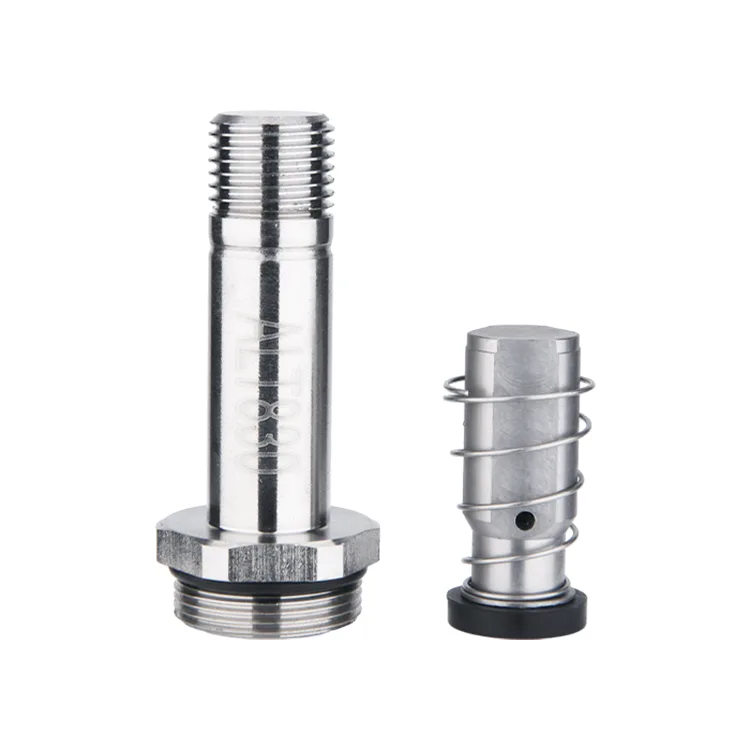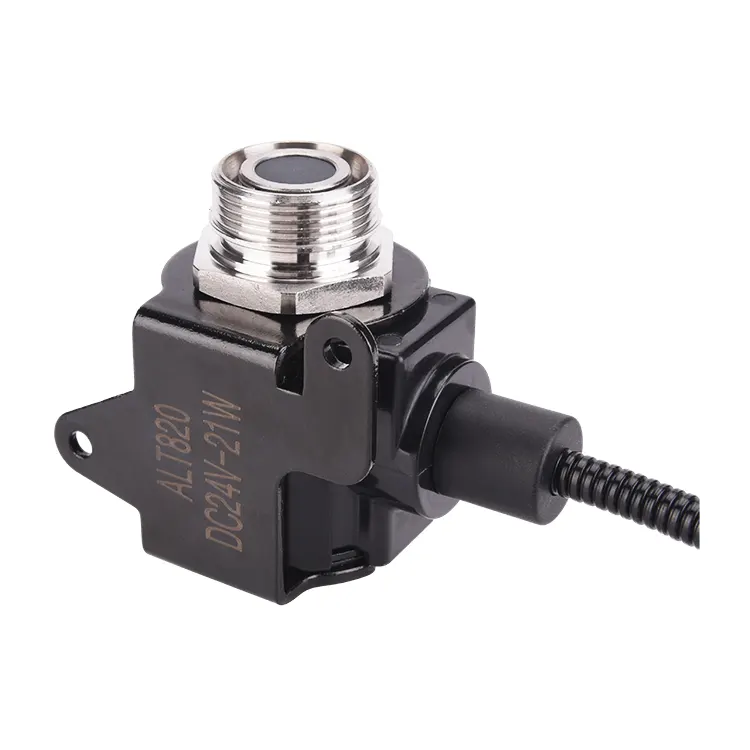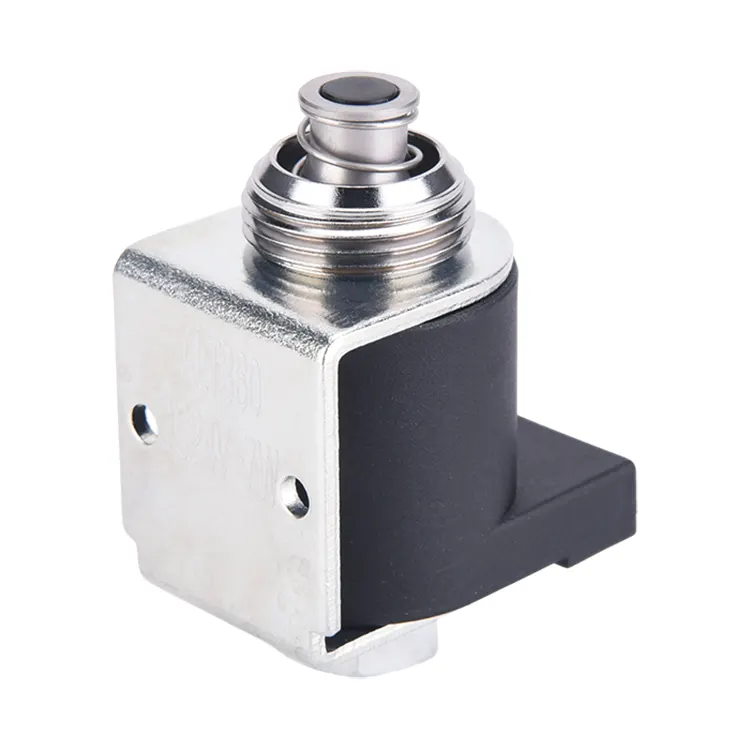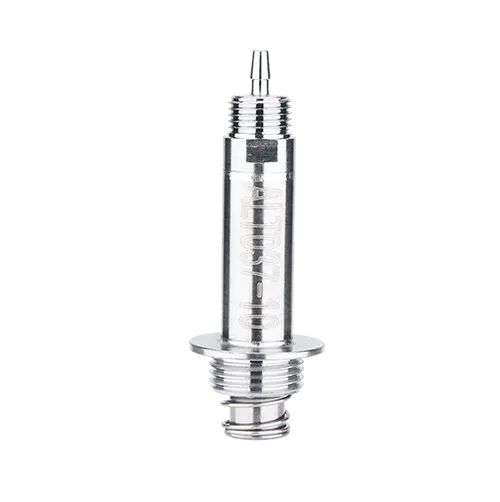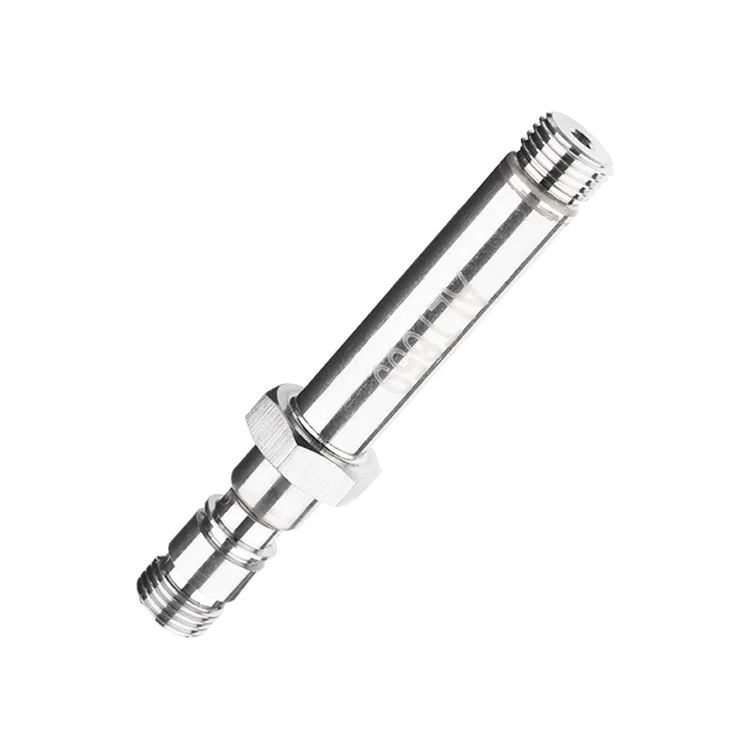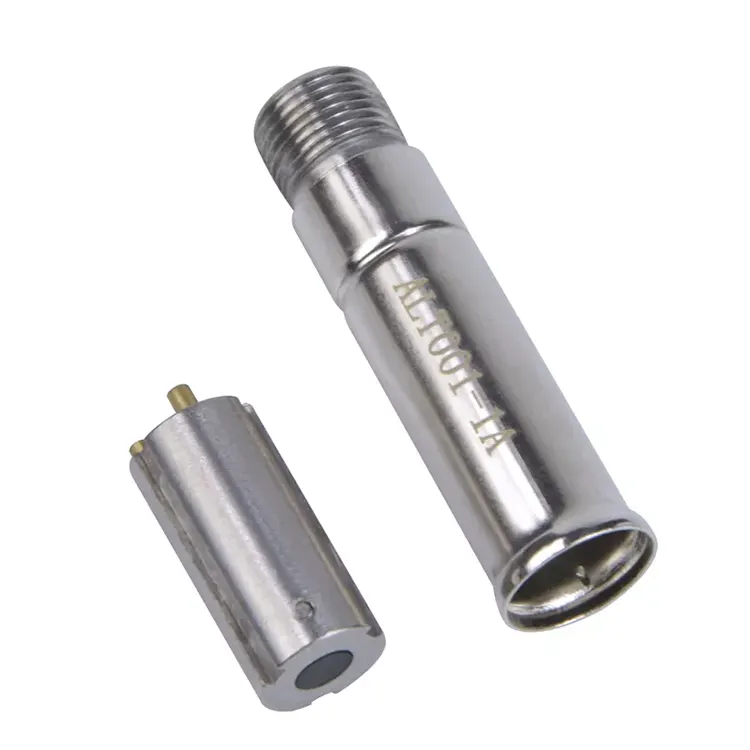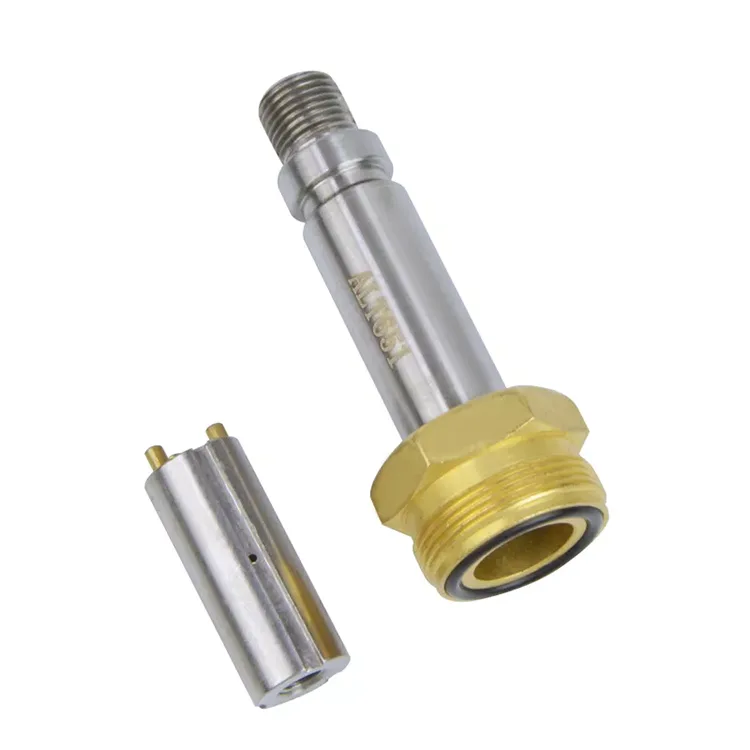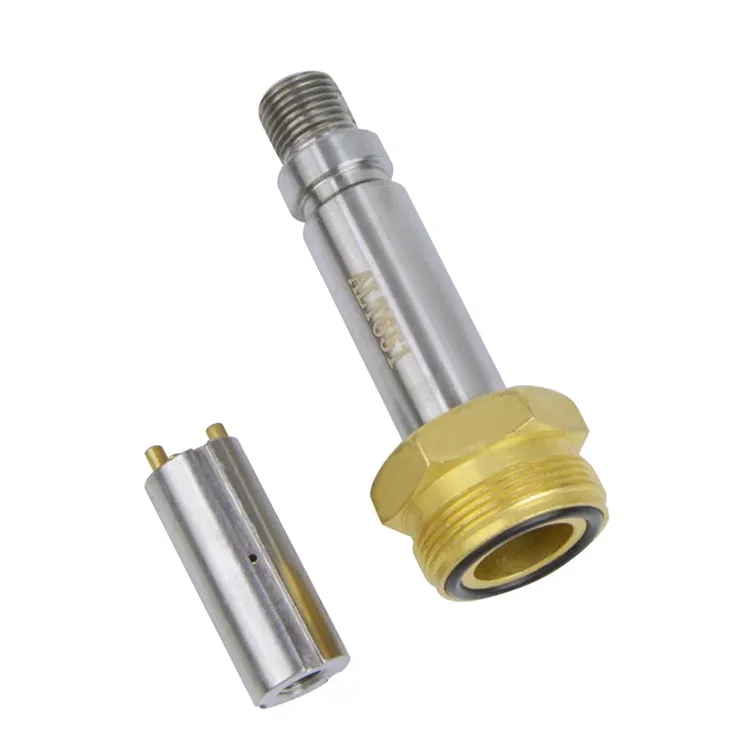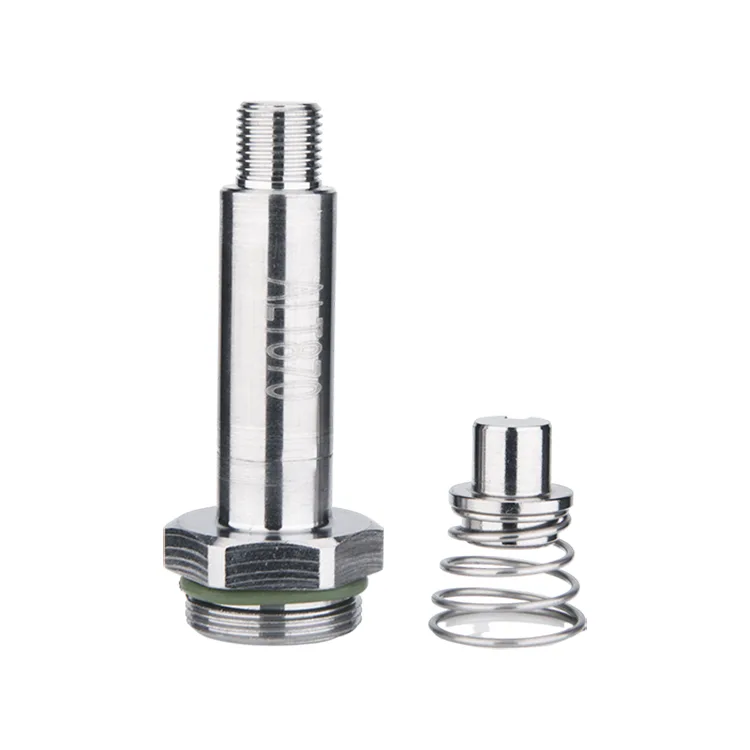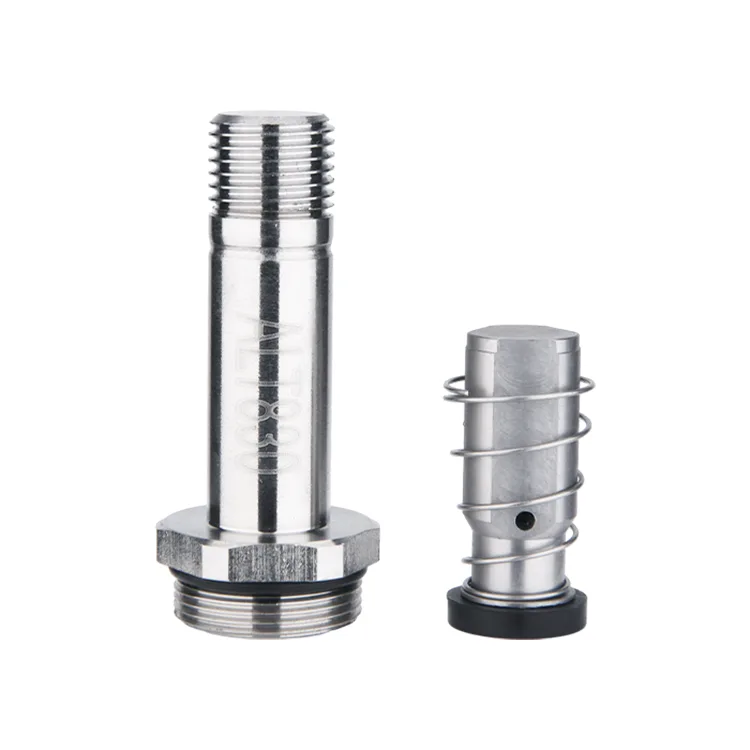
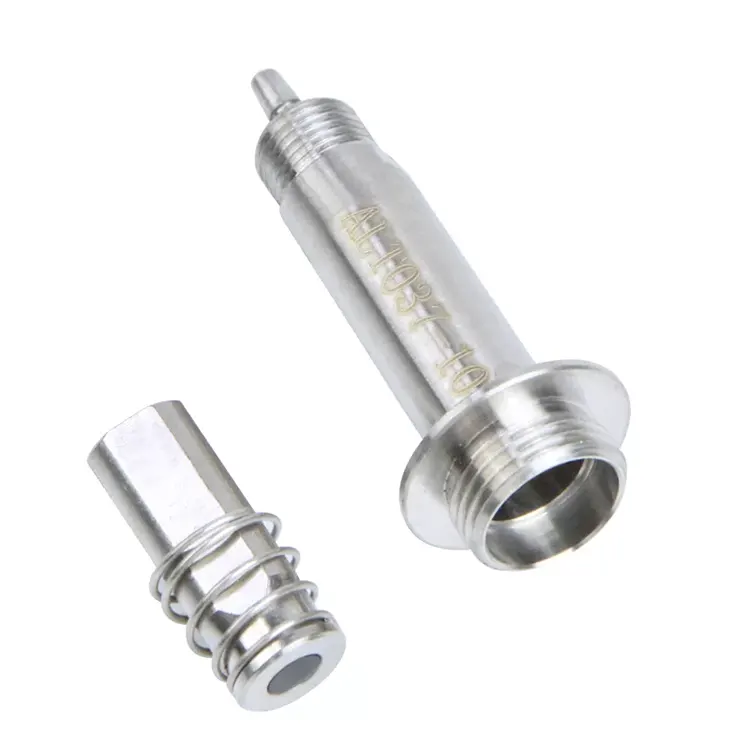
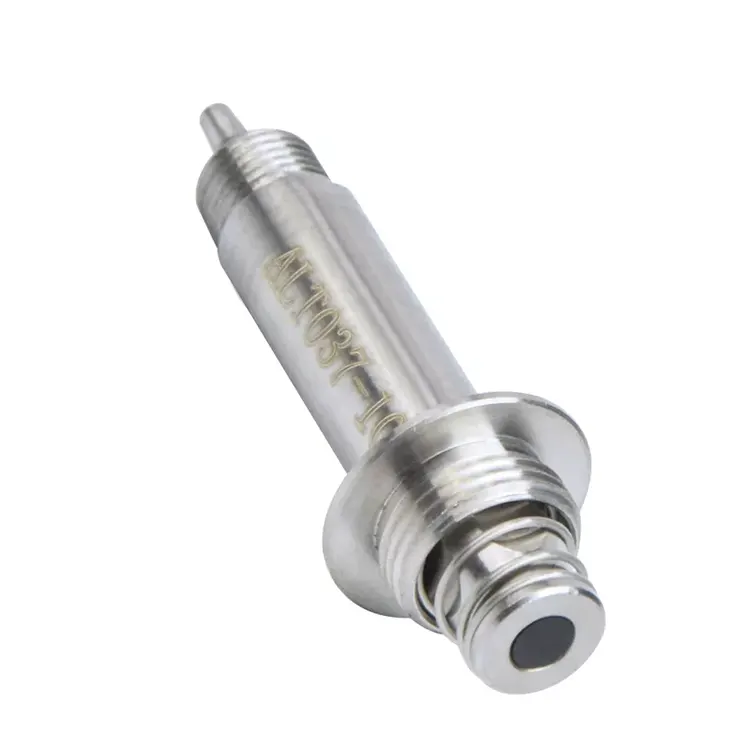
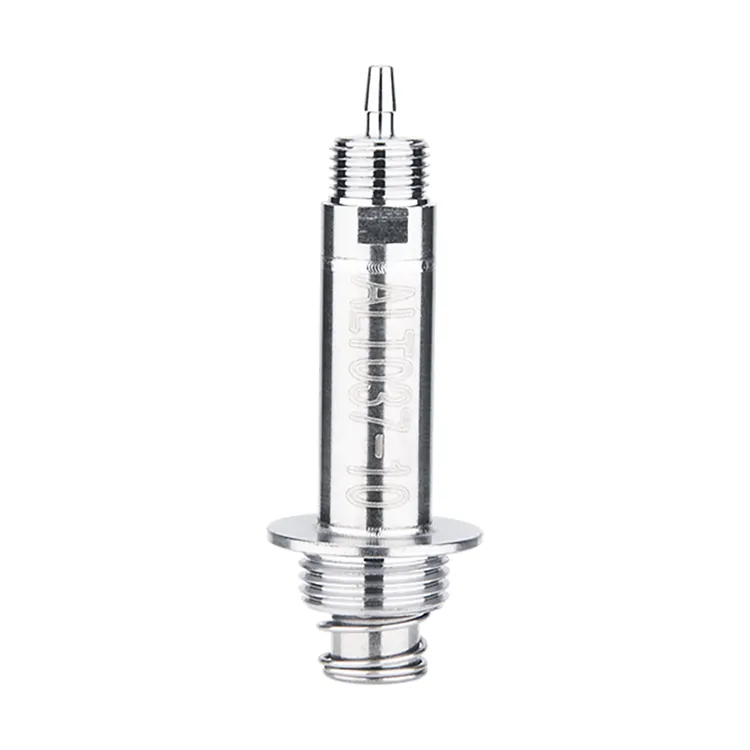
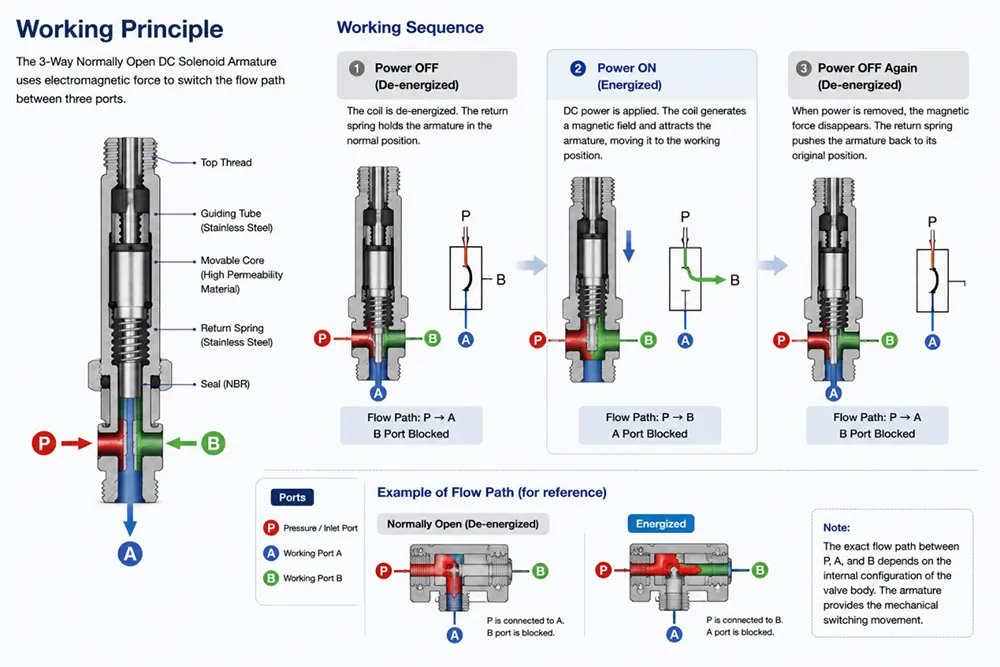
This 3-Way Normally Closed DC Solenoid Armature is designed for solenoid valves that switch fluid flow between three ports. When the DC coil is energized, electromagnetic force moves the plunger to change the flow connection. Once power is removed, the return spring restores the armature to its normally closed position.
In pilot-operated valves, the armature controls a small pilot passage, changing the pressure balance across the main valve core. This allows the main valve to control larger flow rates or higher-pressure media without directly relying on electromagnetic force to move the main valve core.
Unlike a 2-way armature, which controls a single flow path, this three-port structure allows the valve to switch connections between different passages. It can be used in pneumatic, hydraulic, and other fluid control systems, depending on the valve design and operating conditions.
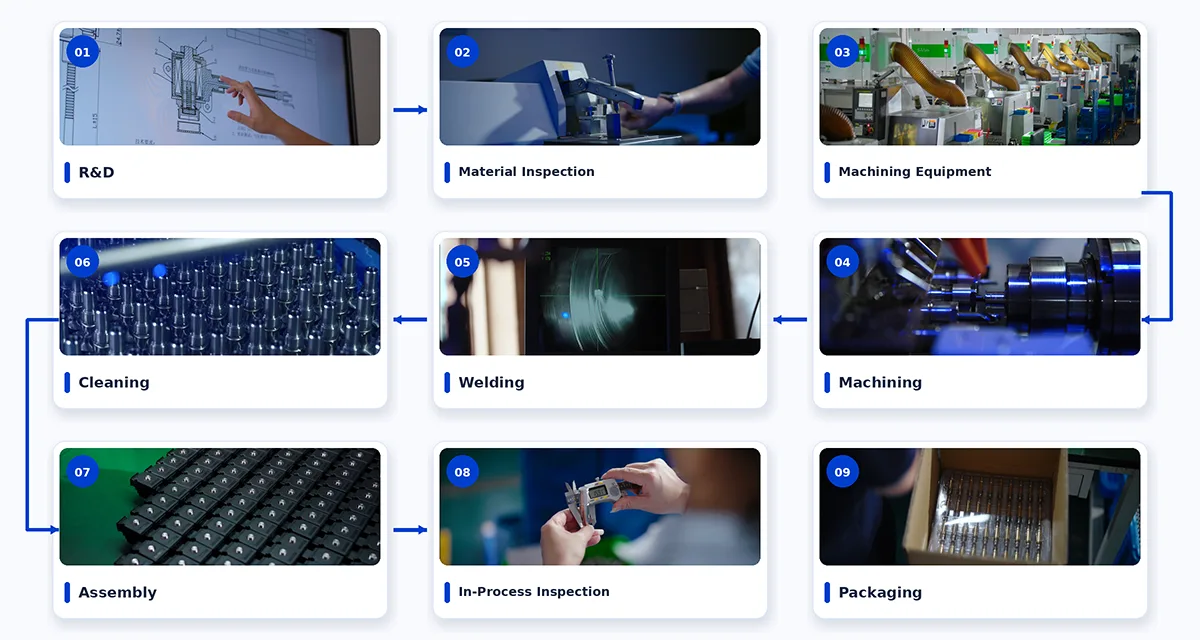
Quality inspection covers incoming materials, machining, assembly, and finished products to ensure compliance with approved drawings and technical specifications.
Materials are checked for specifications, dimensions, surface condition, and identification before production.
The first machined component is inspected against the approved drawings and process requirements. Equipment settings are adjusted if dimensions fall outside the specified tolerances.
QC personnel conduct regular sampling inspections during production, monitoring critical dimensions and machining consistency.
After machining and ultrasonic cleaning, components are transferred to the welding and assembly processes. Finished armatures are checked for dimensional accuracy, surface condition, burrs, and assembly quality.
Testing can cover plunger movement, stroke, spring return, and sealing performance according to product specifications and customer requirements.
Before shipment, finished products are checked for dimensions, accessories, quantities, labels, and packaging requirements.
| Mechanical Specifications | |
| Parameter | Value |
| Armature Type | 3-Way Normally Closed |
| Structure | Plunger + Tube + Spring + Seal Pad |
| Stroke Length | Customized |
| Plunger Diameter | Customized |
| Tube OD | Customized |
| Tube Length | Customized |
| Seal Diameter | Customized |
| Assembly Tolerance | According to drawing requirements |
| Material Specifications | |
| Component | Material Options |
| Armature Core | Stainless Steel / Magnetic Stainless Steel |
| Tube | Stainless Steel / Brass |
| Spring | Stainless Steel |
| Seal Pad | NBR / EPDM / FKM / PTFE |
| Surface Treatment | Nickel Plating / PTFE Coating / White Zinc Plating |
| Electrical & Performance Specifications | |
| Parameter | Value |
| Power Supply | DC |
| Rated Voltage | Customized |
| Magnetic Force | Customized |
| Response Time | Customized |
| Duty Cycle | Continuous / Customized |
| Operating Temperature | Customized |
| Customization Options | |
| Item | Available Options |
| Voltage | 6V / 12V / 24V DC or Customized |
| Dimension | OEM Drawing Supported |
| Seal Material | NBR / EPDM / FKM / Customized |
| Tube Size | Customized |
| Spring Force | Customized |
| Surface Finish | Customized |
| All specifications can be customized according to customer drawings and application requirements. | |
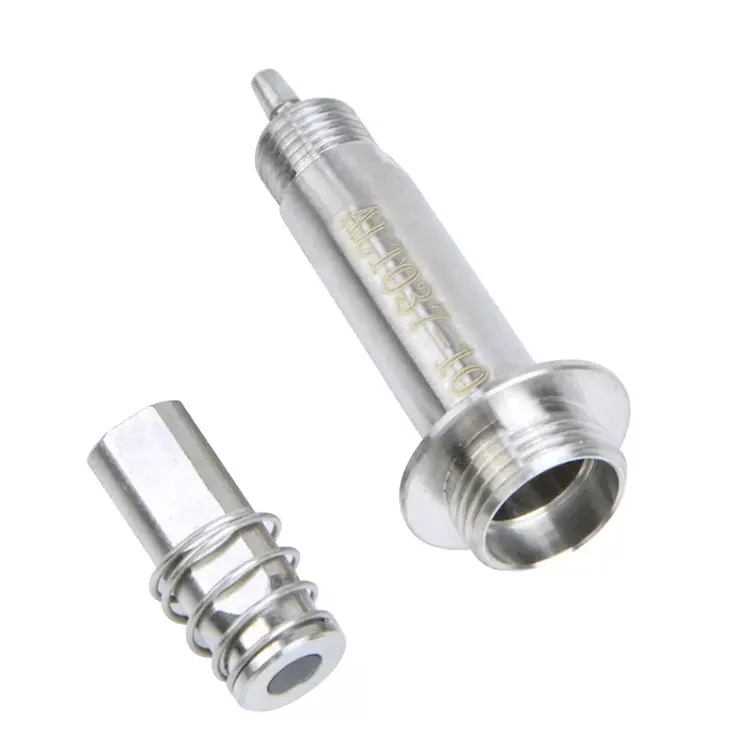
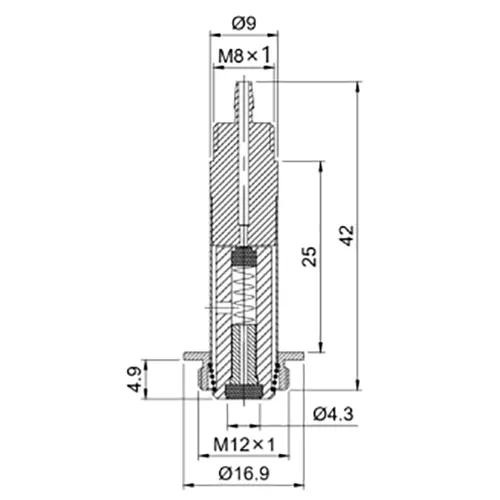
Anlite has developed customized three-port normally closed DC armatures for different solenoid valve designs. The following model shows one representative configuration.
| Model | Tube OD | Tube Length | Connection | Seal Pad | Material |
| ALT037-10 | Φ9 | 25mm | M12×1 | Φ4.3 | Stainless Steel & EPDM |
|
|
|||||
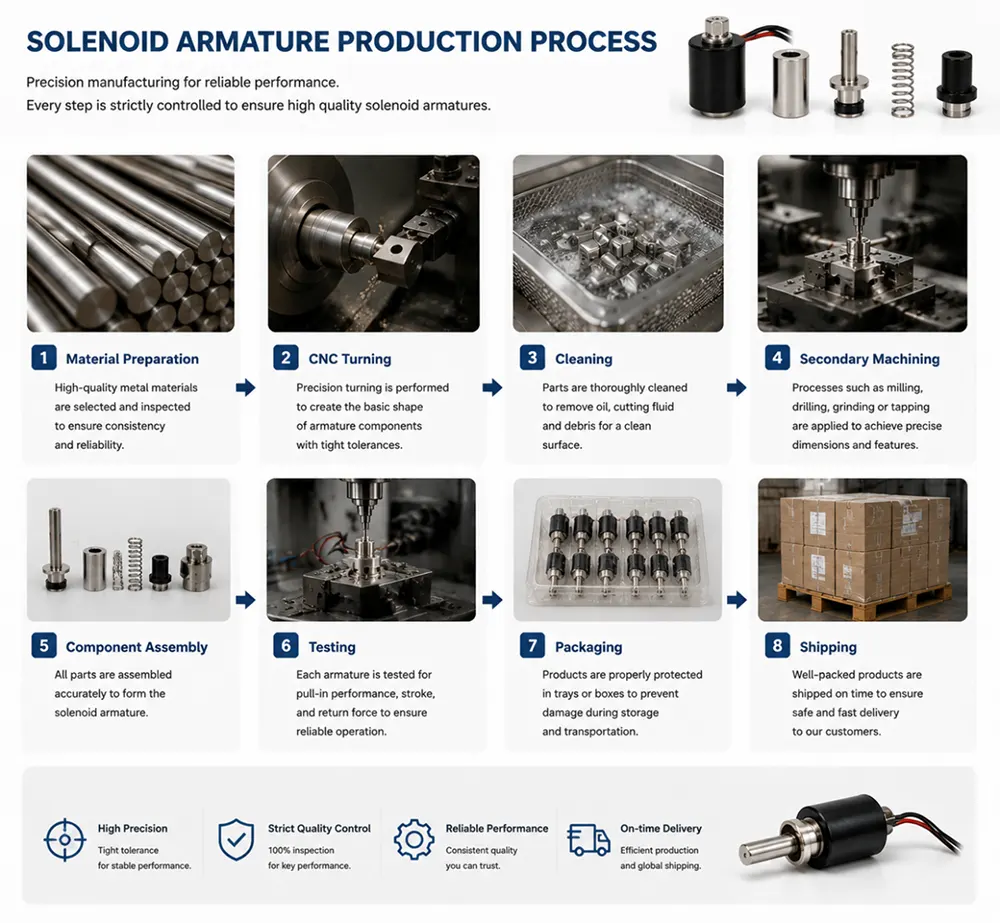
Solenoid armatures require accurate dimensional relationships between the plunger, tube, spring, and sealing components. Dimensional deviations or poor surface finishing can affect plunger movement, magnetic response, and assembly performance.
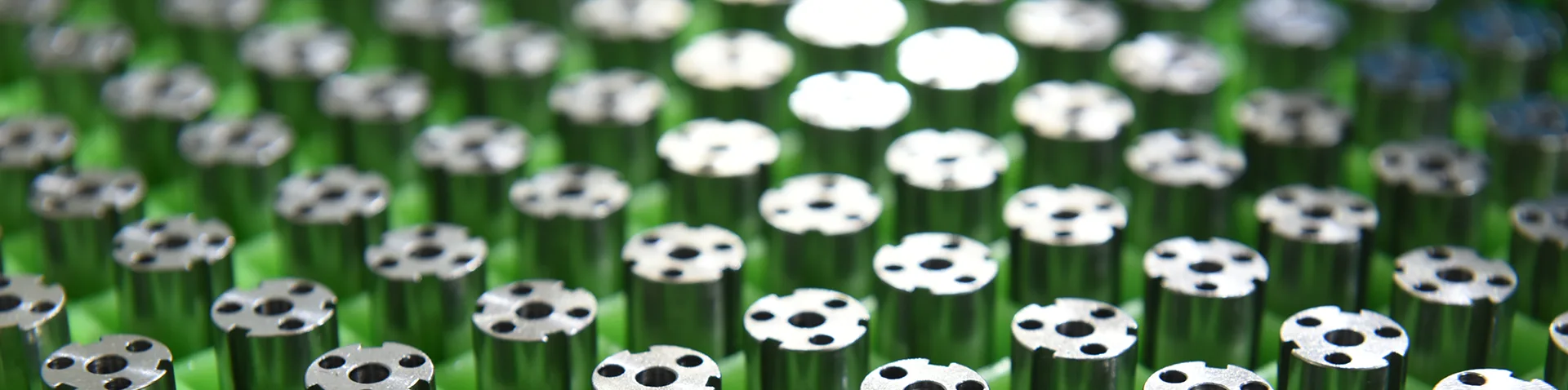
Anlite uses CNC turning to machine critical components, controlling diameter, length, concentricity, and stepped sections according to approved drawings. First-piece inspection is conducted before mass production, followed by in-process dimensional checks.
After machining, components are cleaned to remove machining oil, cutting fluid, and metal residues. Drilling, grinding, polishing, and other secondary operations are applied where required.
For applicable armature structures, high-power laser welding and silver brazing are used according to the product design. These processes help control weld deformation and joint strength.
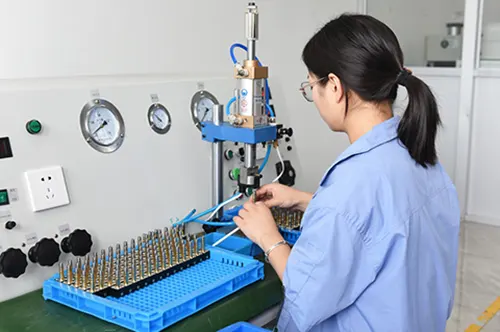
After assembly, finished armatures are inspected against the specified dimensional and functional requirements.
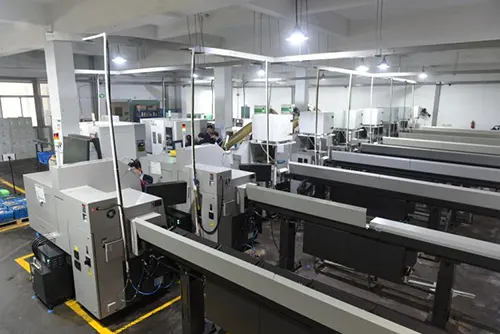
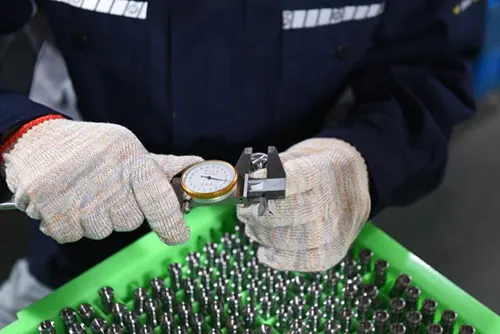
Quality control covers material preparation, machining, assembly, and final inspection.
Incoming materials are checked for identification, dimensions, surface condition, and specifications. The first machined component is inspected against the approved drawing, while critical dimensions are monitored during production.
Final inspection covers dimensional accuracy, surface condition, burrs, and assembly requirements. Functional testing can include plunger movement, stroke, spring return, and sealing performance according to the project specifications.
Inspection methods and acceptance criteria can be established according to customer drawings and technical requirements.
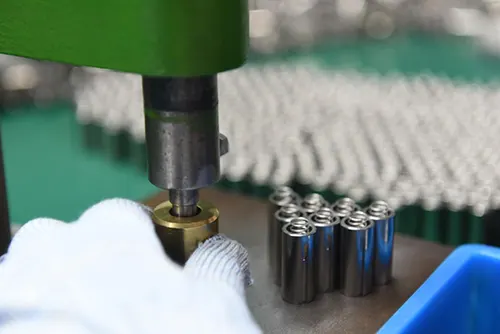
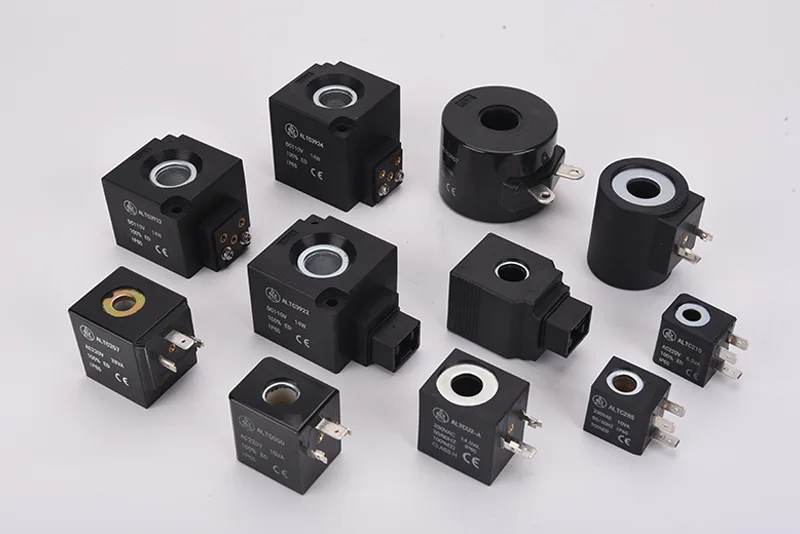
A solenoid armature must match the valve structure and operating requirements. Stroke, plunger dimensions, tube clearance, spring force, magnetic material, sealing material, and coil specifications all affect compatibility and valve operation.
Anlite supports OEM and ODM production based on customer drawings, samples, or technical requirements. Customization options include armature dimensions, tube size, stroke, spring force, magnetic material, sealing material, surface treatment, and connection dimensions.
For a new project, customers can provide a valve drawing or sample together with the coil voltage, required stroke, working medium, operating temperature, and installation dimensions. These details help determine a suitable armature configuration.
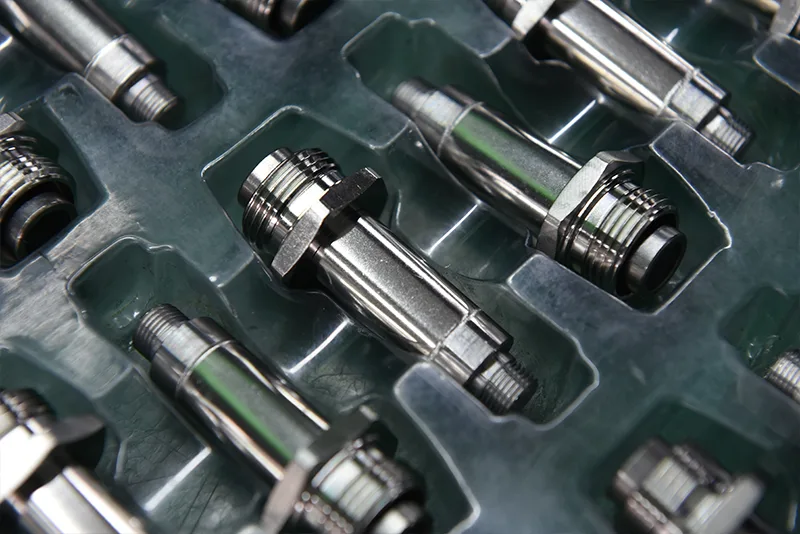
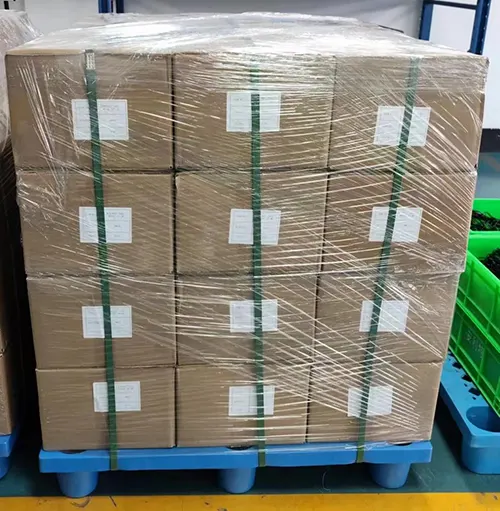
Packaging is selected according to product dimensions, structure, and shipping requirements. Blister trays, bubble bags, and individual boxes can be used to protect components from scratches, impact, and contamination.
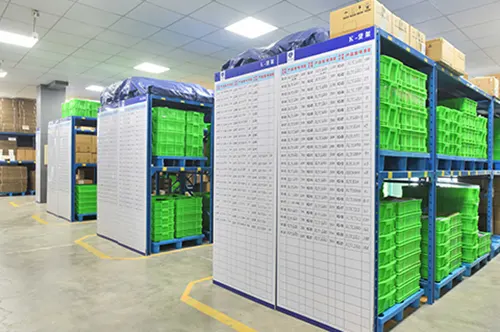
Packaged products are placed in corrugated cartons and stored separately from semi-finished components to prevent mixing and misidentification.
Before shipment, QC checks product labels, quantities, and order details against the packing requirements.
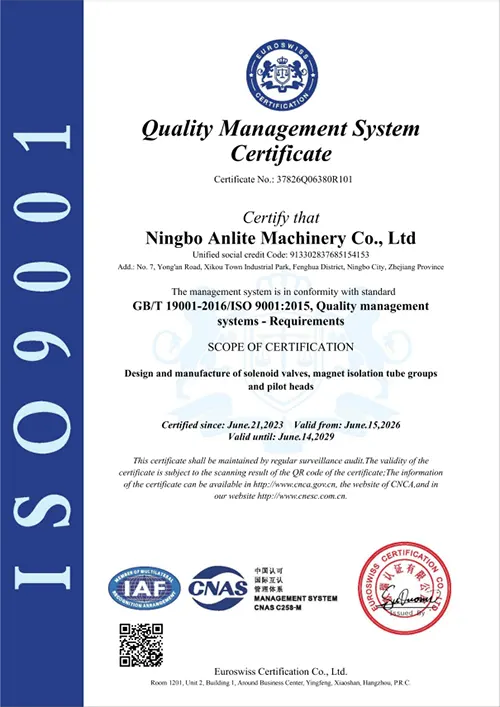
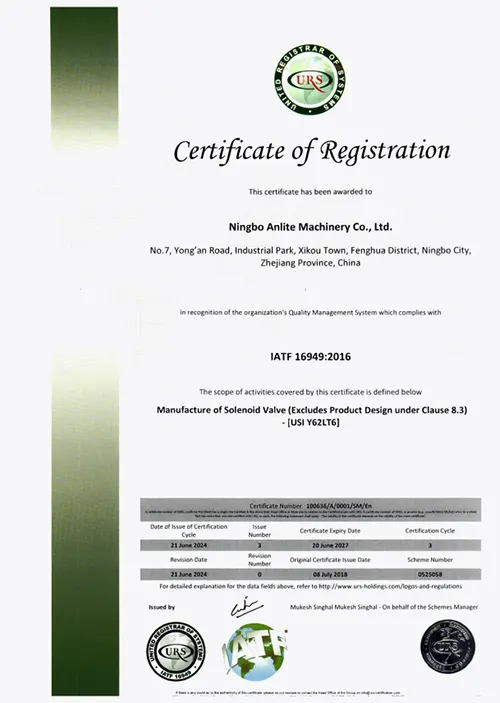
Anlite's production system is certified to ISO 9001 and IATF 16949. Applicable products meet relevant CE requirements.
These quality management systems support manufacturing process control, inspection records, process management, and product traceability. Relevant certification documents can be provided for customer review where applicable.
When the DC coil is de-energized, the valve maintains its designated normally closed position. Applying DC power generates electromagnetic force that moves the armature and changes the flow connection.
The electromagnetic force moves the plunger to switch the connection between three ports. When power is removed, the return spring restores the armature to its original position.
Common customization options include 6V, 12V, and 24V DC. Other voltage specifications can be discussed according to the coil and valve design.
Armature core options include stainless steel and magnetic stainless steel. Tube materials include stainless steel and brass, depending on the application.
Available options include NBR, EPDM, FKM, and PTFE. Selection depends on the working medium and operating temperature.
Yes. Both can be adjusted according to the valve structure, required movement, and electromagnetic force.
Yes. OEM and ODM production is available based on customer drawings, samples, and technical specifications.
A valve drawing or sample, coil voltage, required stroke, tube dimensions, working medium, operating temperature, and installation dimensions are recommended.
Customized samples can be evaluated according to the project structure, material selection, tooling requirements, and production process.
Inspection can cover material identification, dimensions, surface condition, assembly, plunger movement, stroke, spring return, and sealing performance according to agreed requirements.
Compatibility can be evaluated using the original armature sample, valve drawing, or key dimensions. The connection, stroke, spring force, and sealing structure need to be checked before replacement.
Address
No. 7, Yongan Road, Xikou Industrial Zone, Fenghua District, Ningbo City, Zhejiang Province, China
Tel