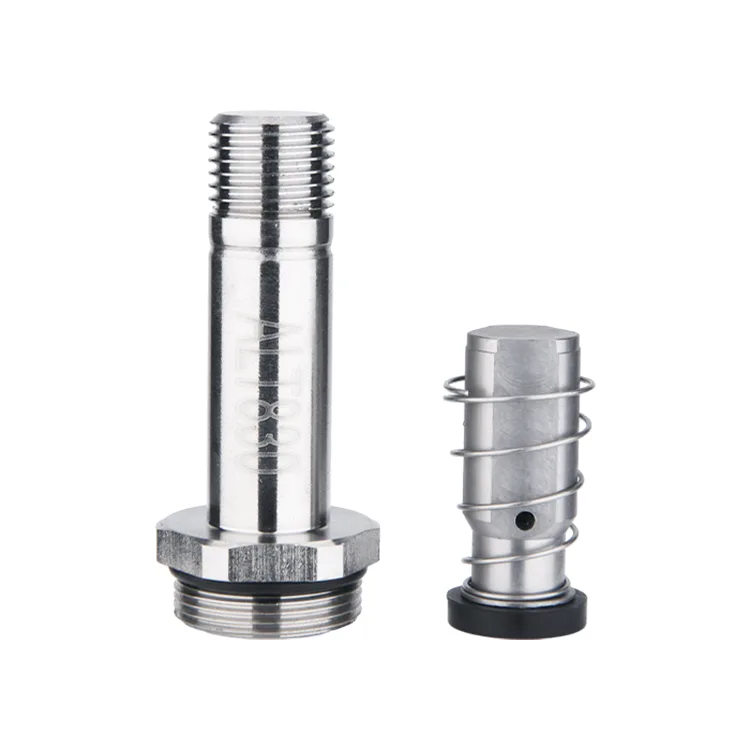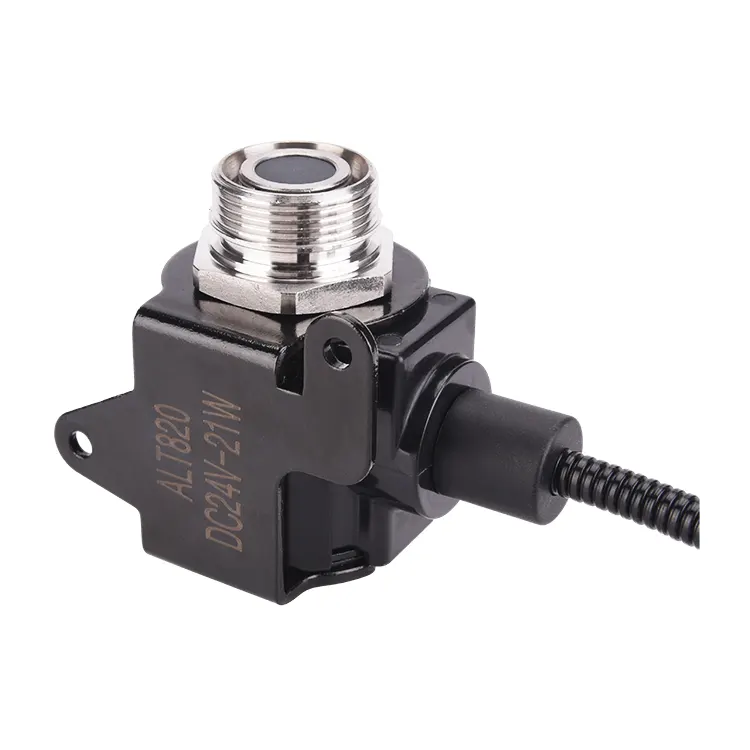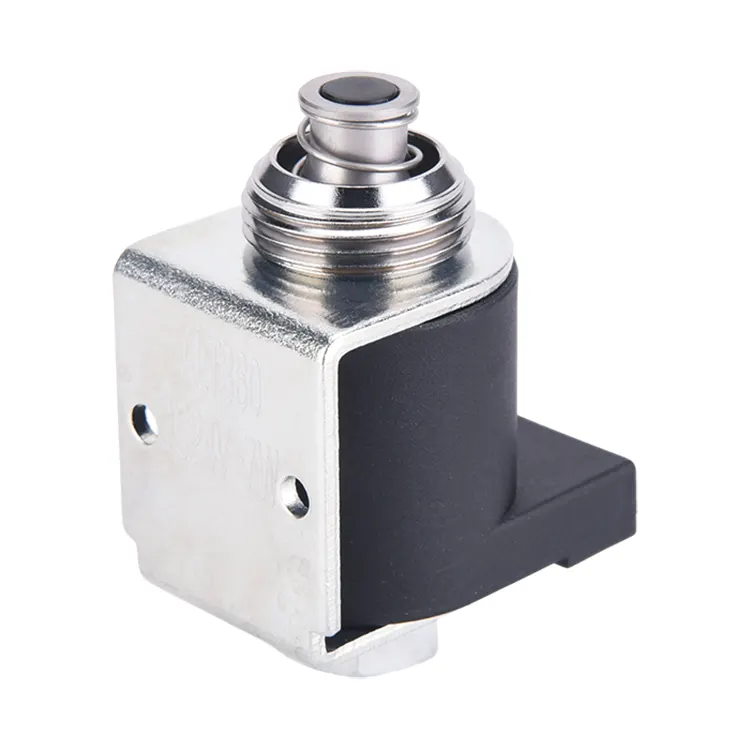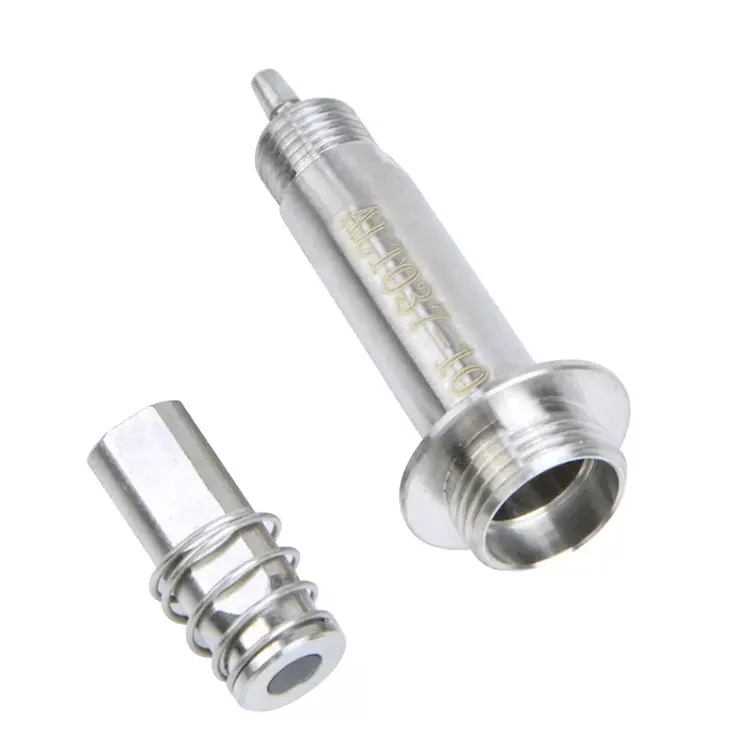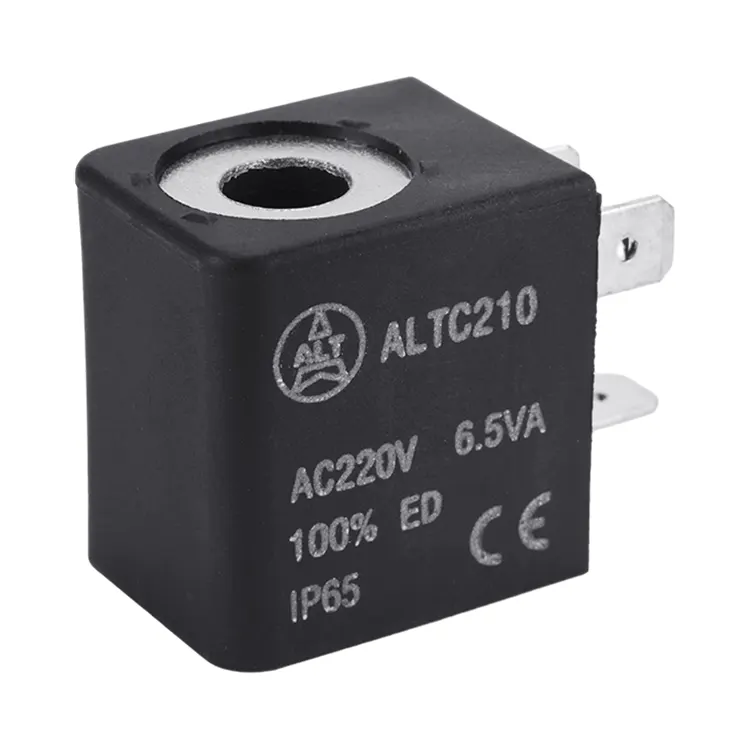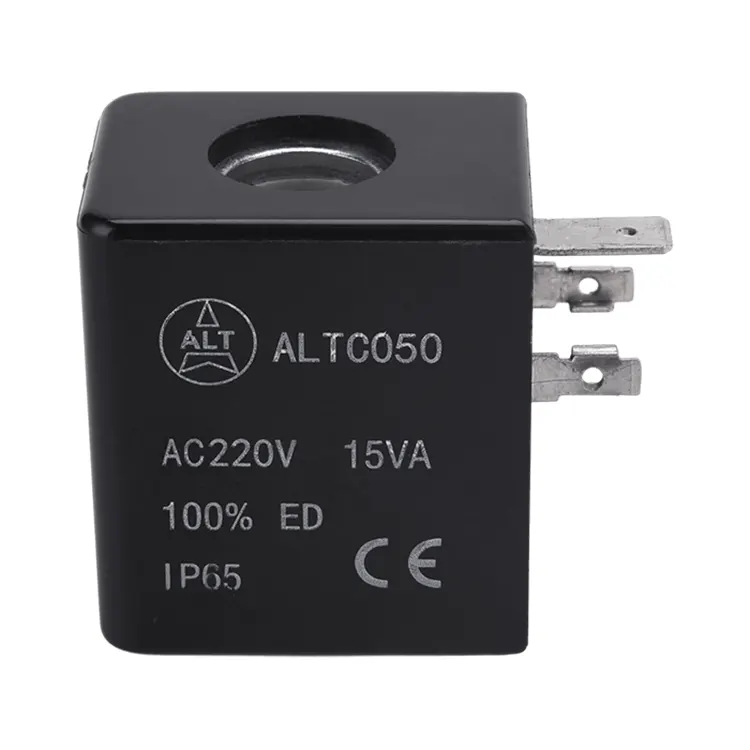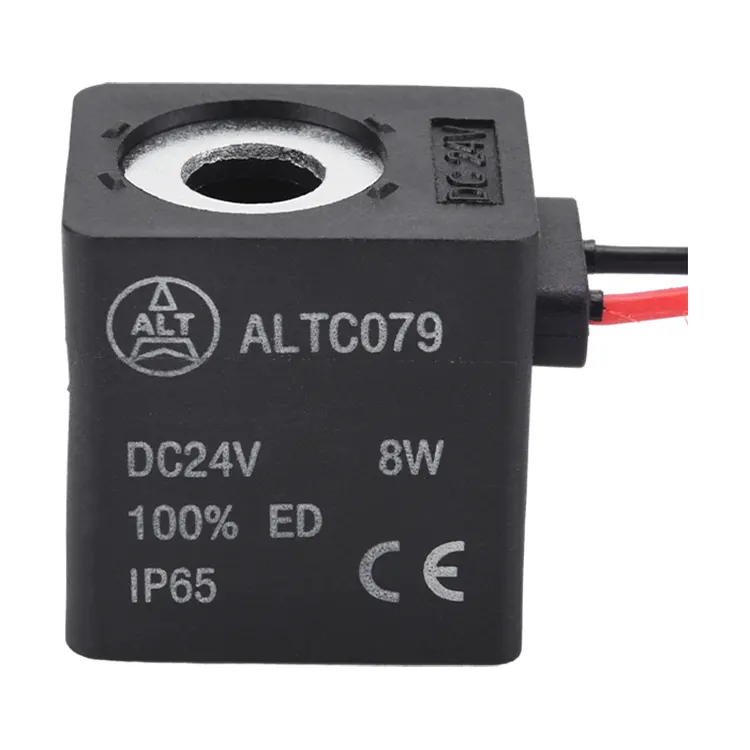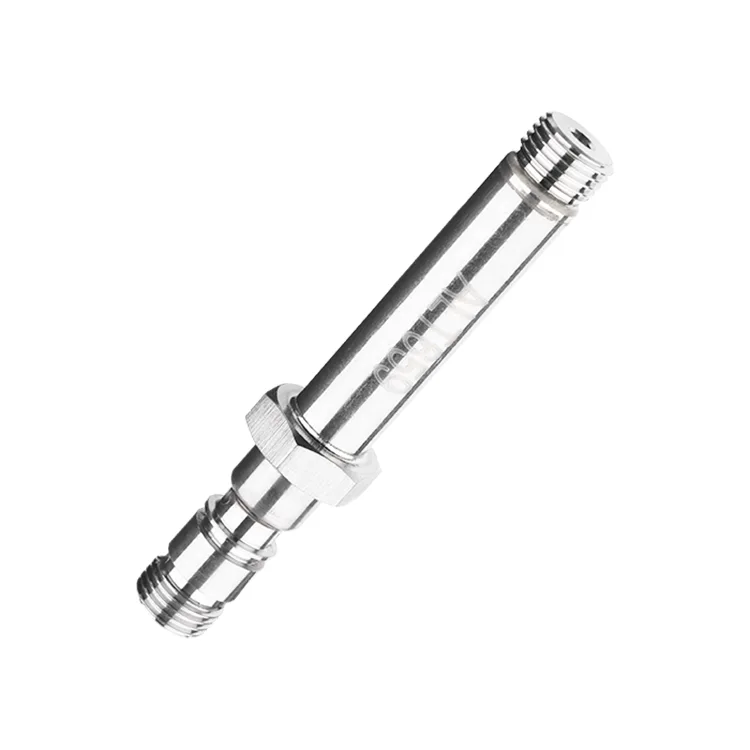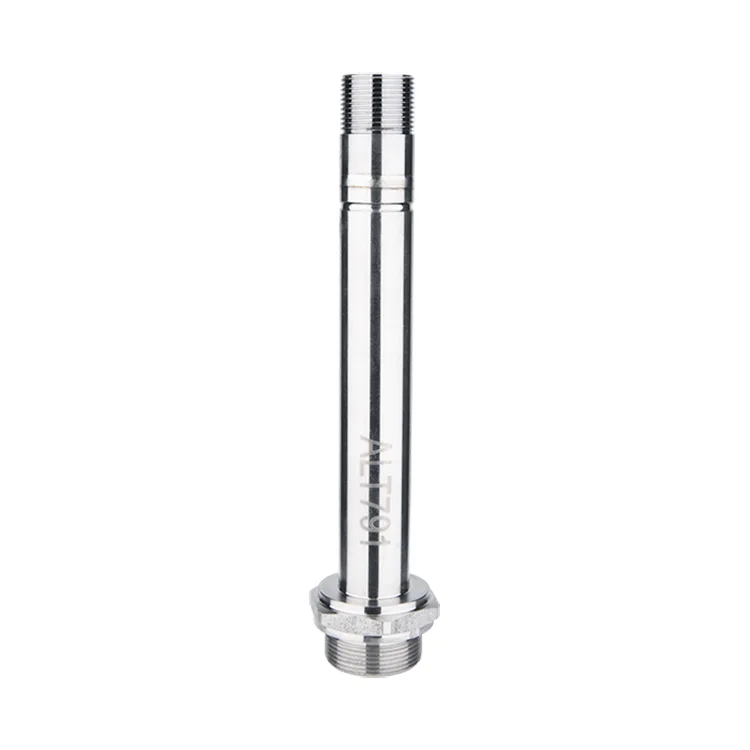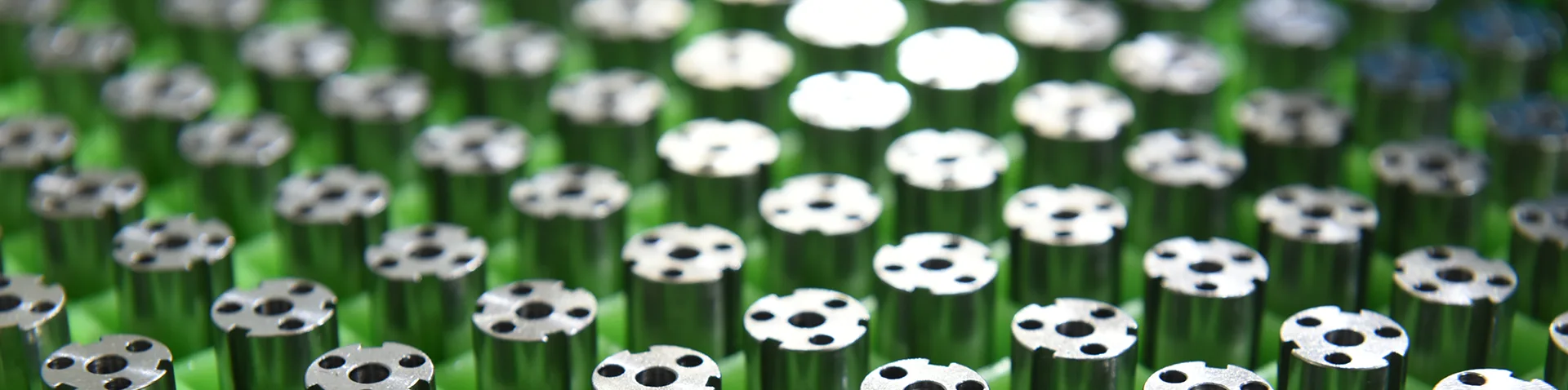
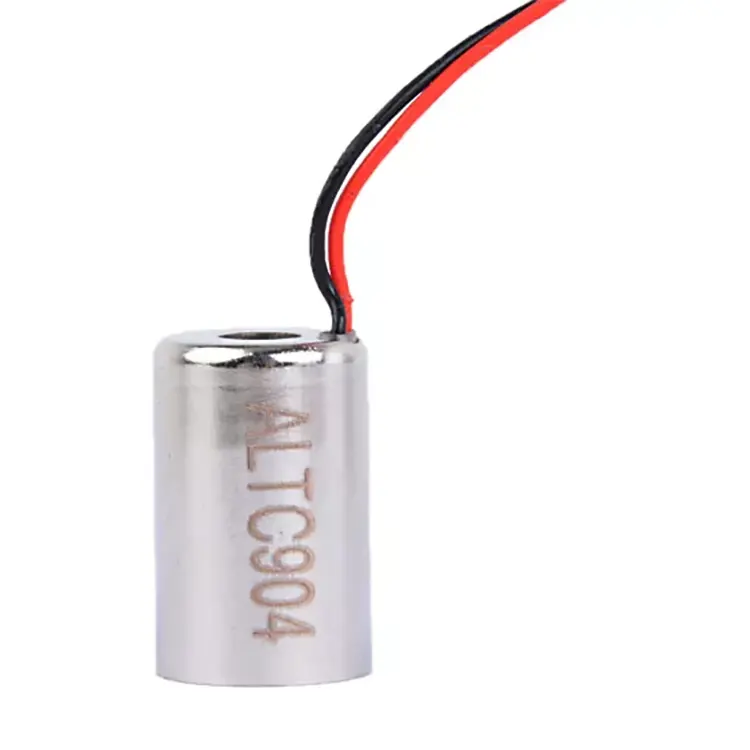
Our Lead Wire AC Bistable Solenoid Coil uses a permanent magnet to maintain the armature in either of two stable positions after a switching pulse. Unlike conventional AC solenoid coils that may require continuous energization to maintain an operating state, this design needs power only during switching.
This operating principle helps reduce standby energy consumption and heat generation in equipment that does not require continuous actuation. It is suitable for applications where the mechanism changes state occasionally but must remain in position between operations.
The integrated lead wires simplify electrical connection and provide flexibility for compact assemblies and equipment with specific wiring layouts. For applications exposed to dust or moisture, an overmolded construction can provide IP65 protection when the selected design has been verified for that rating.
We customize voltage, power, dimensions, lead wire length, insulation class and encapsulation materials according to the equipment requirements. The switching arrangement can also be configured to match the customer's control circuit.
The coil switches the armature between two stable positions using electromagnetic force and permanent-magnet holding.
Pulse activation: An electrical pulse energizes the coil and generates a magnetic field.
State switching: The electromagnetic force moves the armature to the opposite position.
Magnetic holding: After the pulse ends, the permanent magnet maintains the new position without continuous coil energization.
Next operation: A subsequent pulse switches the mechanism according to the specified switching configuration.
The required pulse duration, voltage and control circuit depend on the coil design and mechanical assembly.
|
Feature |
Bistable Coil |
Conventional AC Solenoid Coil |
|
Operating method |
Pulse-operated switching |
Typically energized during actuation or holding |
|
Position holding |
Permanent-magnet holding |
Depends on the mechanism |
|
Power between switching operations |
No continuous coil power required to maintain the state |
May require continuous energization |
|
Heat generation |
Reduced during periods without energization |
Can accumulate during continuous energization |
|
Control requirements |
Compatible pulse-control circuit |
Depends on the solenoid design |
A bistable design is useful when equipment must retain its last state without continuously energizing the coil. The final selection depends on the required force, mechanical travel, switching frequency and control arrangement.
We review drawings, existing samples or technical requirements to determine a suitable coil configuration.
|
Item |
Available Options |
|
Rated voltage |
Confirmed according to the required AC bistable design |
|
Coil power |
Customized for switching requirements |
|
Dimensions |
Adapted to the available installation space |
|
Lead wires |
Length and connection arrangement customized |
|
Insulation class |
Class H (180°C) available for applicable configurations |
|
Encapsulation |
Overmolding or vacuum impregnation |
|
Materials |
Nylon PA66, PBT, PPS or BMC, subject to process compatibility |
|
Protection rating |
IP65 available for applicable overmolded designs |
For an accurate quotation, please provide the required voltage, coil dimensions, switching function, lead wire length, operating temperature and target application.
We confirm the electrical and mechanical requirements before production, including wire diameter, number of turns, resistance, inductance, rated voltage and current, insulation class, duty cycle and lead wire specifications.
If some parameters are unavailable, we clarify the actual operating conditions before recommending a configuration.
Samples are produced for evaluation before mass production. Depending on the agreed requirements, testing may include electrical performance, inter-turn withstand voltage, temperature rise, mechanical strength and switching function.
Where new tooling is required, 3D-printed samples may be considered for initial design evaluation. Mass production proceeds after the sample meets the agreed acceptance criteria.
Materials are checked against applicable specifications before entering production. These may include enameled copper wire, bobbins, lead wires, terminals, insulating components and encapsulation materials.
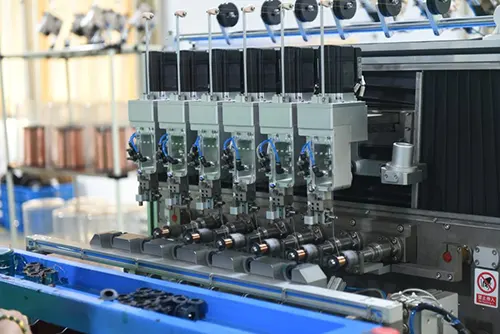
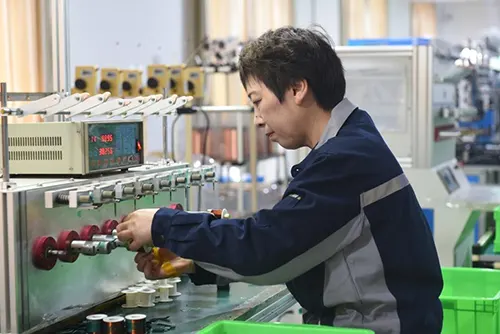
Our winding equipment includes fully automatic multi-spindle machines, semi-automatic multi-spindle machines and semi-automatic single-spindle machines.
Multi-spindle equipment supports efficient production of multiple coils, while single-spindle machines accommodate selected large-wire-gauge requirements, complex winding patterns and customized designs.
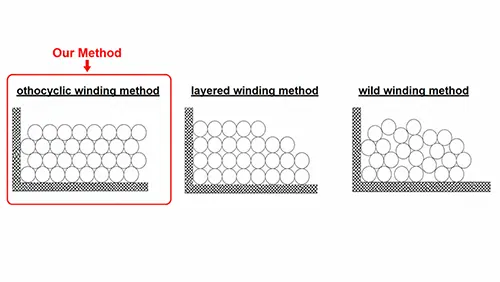
We use orthocyclic winding where the design and wire specifications permit. This method arranges turns in a compact, regular pattern to improve winding-space utilization. The achievable copper fill factor depends on wire diameter, insulation thickness, bobbin geometry and process conditions.
Winding tension, turn count and layer arrangement are controlled according to the product specifications.
The winding wire is connected to the specified lead wires using the designated joining process. Connection points receive appropriate insulation treatment, such as insulating tubing or compatible insulating compounds, to reduce the risk of short circuits and insulation failure.
Vacuum Impregnation
Thermosetting epoxy or polyester resin can penetrate internal voids and form an insulating structure after curing. This process can improve insulation integrity and mechanical stability.
Overmolding
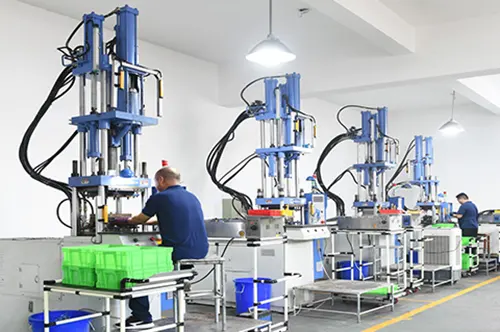
Injection molding encapsulates the coil within a protective housing. Material options include:
Nylon PA66: For selected applications requiring toughness and mechanical protection.
PBT: For designs requiring dimensional stability and electrical insulation.
PPS: For applications requiring suitable high-temperature material performance.
BMC: For selected applications requiring heat resistance and dimensional stability.
Material selection depends on operating temperature, chemical exposure, electrical requirements and dimensional constraints. IP65 protection must be verified for the finished design.
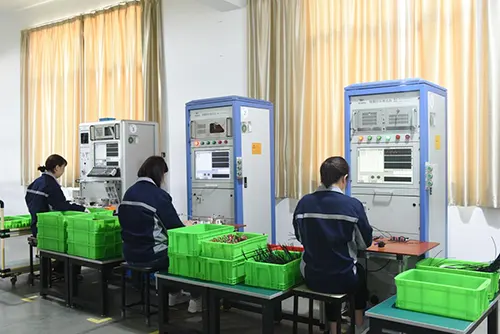
Completed coils undergo final inspection and applicable electrical testing according to the agreed specifications. Checks may include dimensional inspection, resistance measurement, functional verification and high-voltage withstand testing.
Our high-voltage testing capability can exceed 1500 V under specified test conditions. Actual test voltage and acceptance criteria depend on the coil design and insulation system.
The coil can be considered for equipment requiring intermittent actuation and stable position retention.
Smart metering: Switching mechanisms that retain a state between operating commands.
Latching and locking systems: Mechanisms that switch between two stable positions.
HVAC controls: Selected control mechanisms requiring intermittent switching.
Battery-powered equipment: Applications where reducing standby energy consumption is important.
Industrial control assemblies: Equipment requiring defined electrical connections and switching functions.
Suitability depends on the required force, mechanical travel, switching frequency, environmental conditions and control circuit.
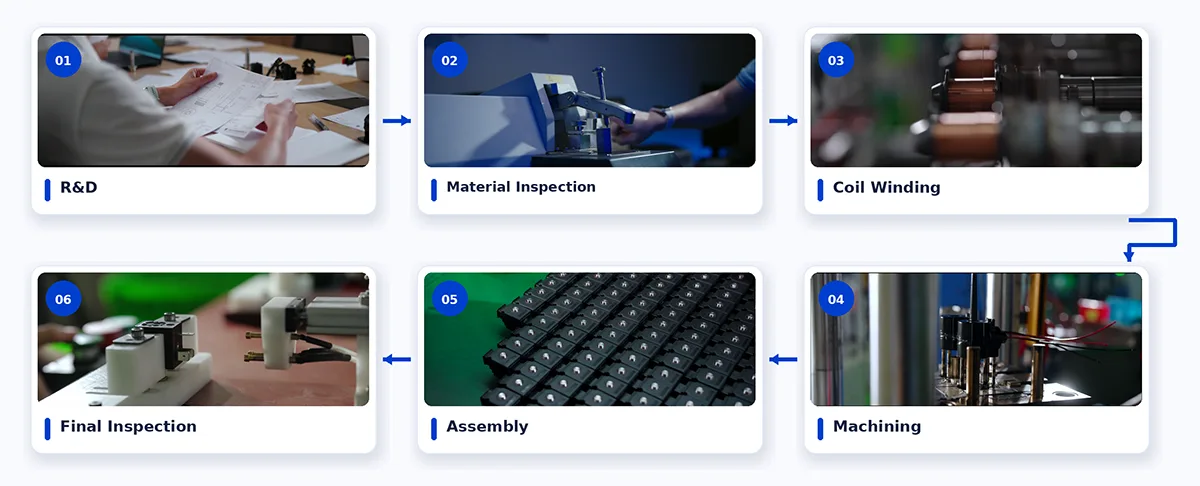
Our manufacturing and inspection procedures cover incoming materials, winding, lead wire connection, insulation processing and final electrical inspection.
The company holds ISO 9001, IATF 16949 and applicable CE-related certifications or compliance documentation. Certificate validity, issuing body and scope should be confirmed against the current documentation before making product-specific compliance claims.
For projects with particular quality requirements, we can review the technical specifications and inspection criteria before sample approval and production.
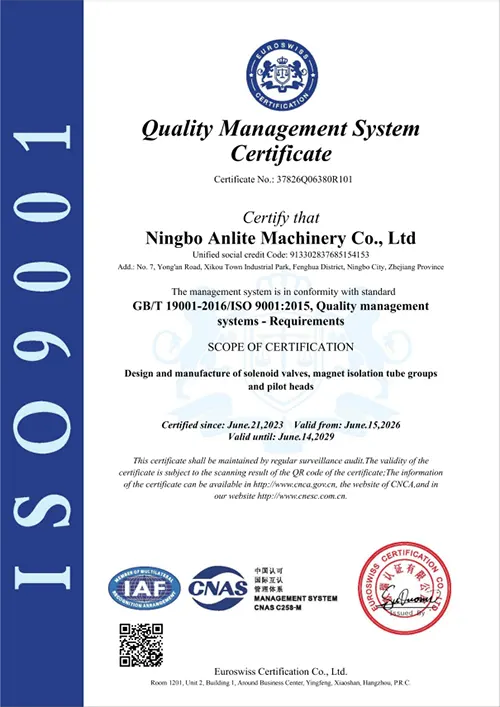
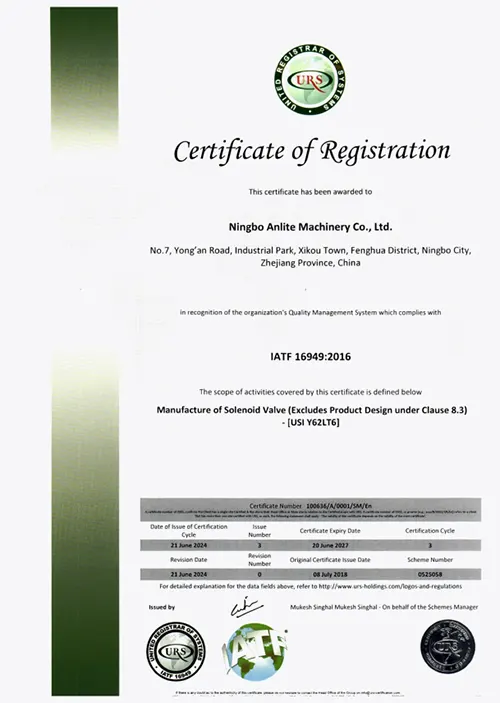
Class H insulation, rated at 180°C, and IP65 protection are available as standard specifications for applicable configurations. Other requirements can be evaluated according to the application and selected construction.
Our commonly manufactured solenoid coils include 12 VDC, 24 VDC, 12 VAC, 24 VAC, 110 VAC and 220 VAC configurations. Other voltage and power specifications can be customized.
These options cover our broader solenoid coil range and are not necessarily available for every AC bistable design. Please provide the required voltage and switching conditions for confirmation.
No. Once the armature reaches either stable position, the permanent magnet maintains that position without continuous coil energization. Electrical energy is required during switching, and the control circuit may have its own power consumption.
Yes. Lead wire length, coil dimensions and selected installation features can be adapted to the equipment design. Drawings, dimensional requirements or an existing sample help us assess feasibility.
Samples can be produced for design evaluation and testing. Acceptance criteria should be agreed in advance, including electrical parameters, switching function, dimensions and insulation requirements.
Please provide the required voltage, switching function, coil dimensions or drawing, lead wire length, operating temperature, protection requirements and estimated quantity. An existing sample or equipment drawing can also support the initial technical review.
If you need a Lead Wire AC Bistable Solenoid Coil for your equipment, send us your drawing, sample or technical requirements. We can review the electrical specifications, winding configuration, lead wire arrangement and encapsulation options to assess suitability for your application.
Contact us with your required voltage, dimensions and switching function to discuss sample development and production requirements.
Address
No. 7, Yongan Road, Xikou Industrial Zone, Fenghua District, Ningbo City, Zhejiang Province, China
Tel